What does self-compassion have to do with respect?
Quite a lot, actually.
Picture this. It’s Saturday morning, and you’re about to watch your 11-year-old play soccer. As you walk past the field, you notice a sign.
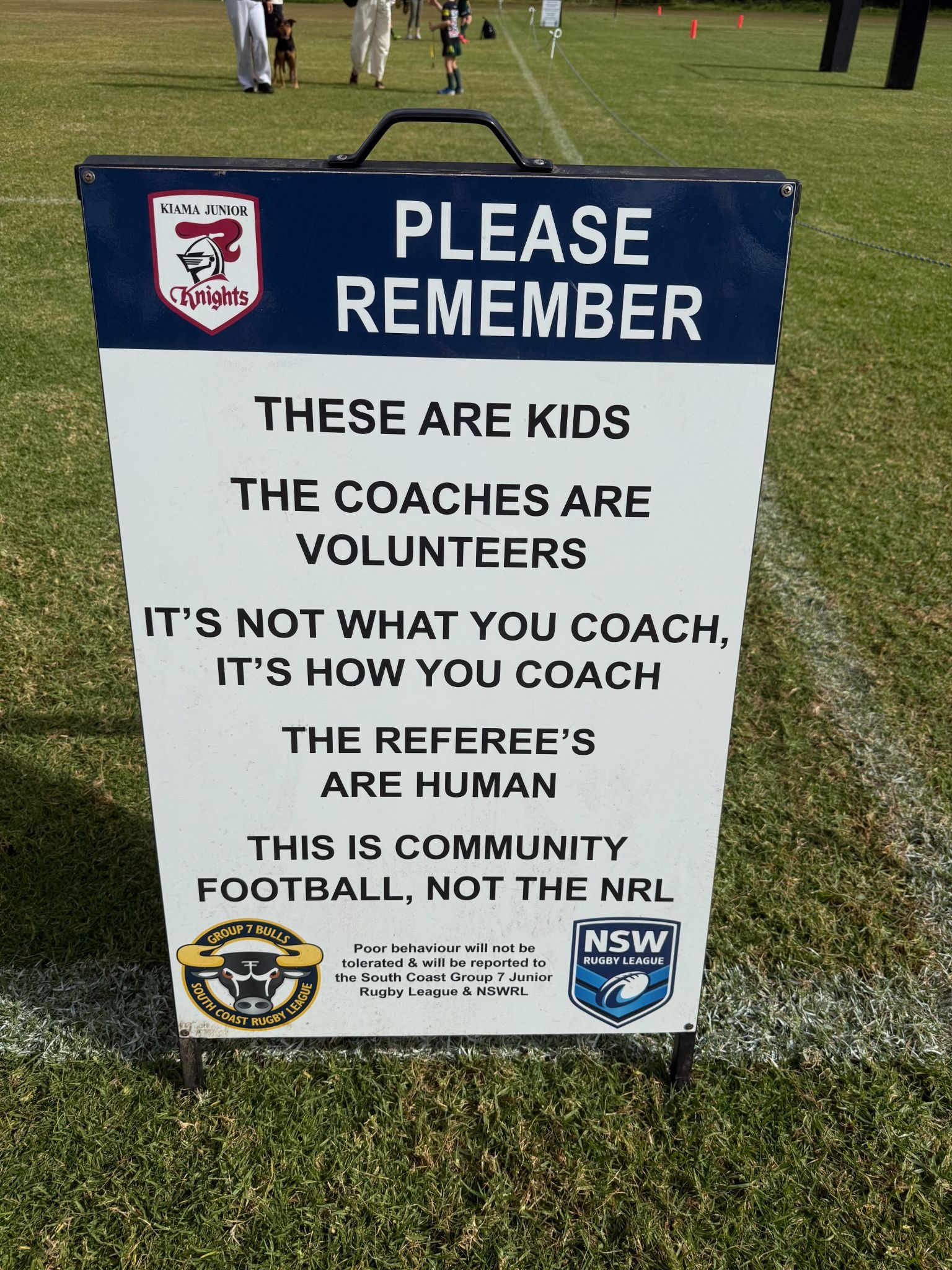
Mmmm. Interesting. You’ve seen a similar sign at the netball courts. You dismiss it — obviously it doesn’t apply to you and then other worries creep in.
You notice your child’s self-talk can be pretty harsh. They’re quick to anger when what they’re really feeling is frustration, loneliness or sadness. In the back of your mind is a growing fear that as your son gets older, he’ll bump into the manosphere and its very loud, very unhelpful messages. Then you think about your daughter, and the rates of violence against young women that begin from the age of 15.
And then you realise you’re having extremely intense thoughts for 8:30 in the morning, and what you actually need to do is chill out and eat a snack.
Ah. That’s better.
You reassure yourself with the old favourites: not all boys, not all parents. Well. Luke Bateman, who features across three Season 6 episodes, has a brilliant way of sending that argument flying.
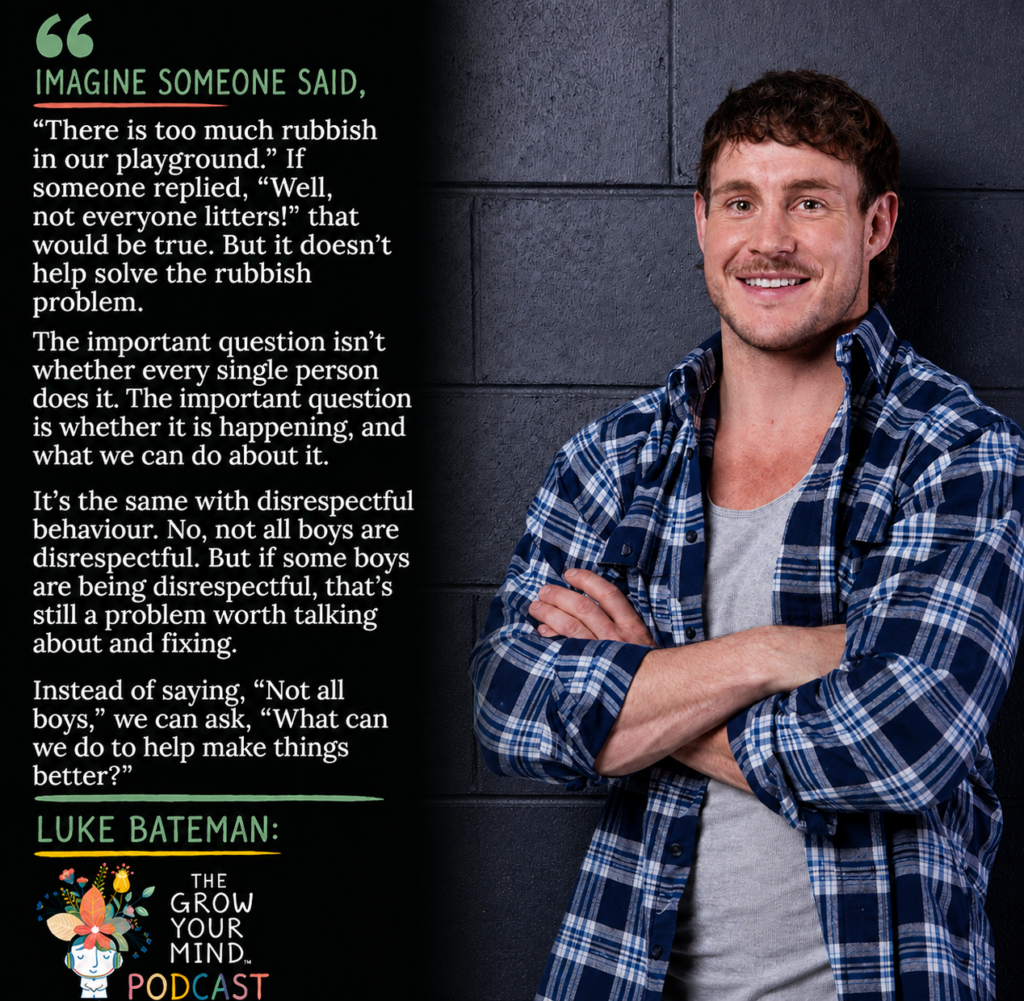
Great. Thanks, Luke. Surely all of this is above our pay grade as good-enough parents.
Well. At Grow Your Mind, we’ve decided to open the door to some of these big, complex and occasionally awkward conversations, for teachers and parents both. Season 6 of the Grow Your Mind Podcast is our imperfect contribution to what the world quite desperately needs right now: a little more kindness, a little more emotional regulation and — sing it with me — R-E-S-P-E-C-T.
Imperfect? Absolutely.
Primary school children came up with the ideas, helped write the scripts and became the voice actors. Most scenes were recorded in one take — not because we were in a rush, but because confidence grows through doing, not endless retakes. The children weren’t just making a podcast. They were practising using their voice, backing themselves and contributing to something bigger than themselves. Then they got to pay it forward, helping thousands of other children hear stories, practise new skills and build emotional literacy.
So what’s Season 6 all about? And why are we quietly (okay, not that quietly) claiming here at GYM HQ that it might just be our most important season yet?
It starts with self
Call us controversial, but we don’t think respect begins with rules. It begins with identity.
Before children decide how they’ll treat other people, they’ve already decided how they’ll treat themselves. Every time they make a mistake, get left out, miss the team or feel embarrassed, they’re practising something. They’re either practising self-criticism or self-compassion.
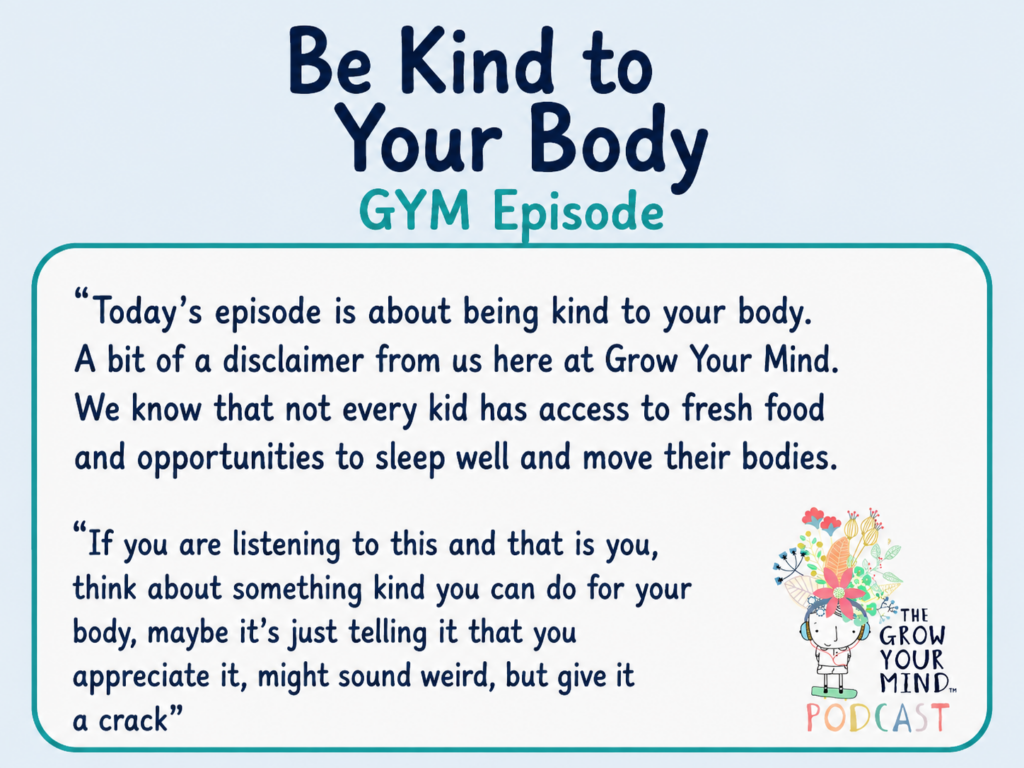
Across the first six episodes, we explore what self-compassion actually looks like in everyday life: noticing the harsh inner critic, being as kind to yourself as you’d be to your best friend if they stuffed up, asking for help, speaking up for yourself, and treating your body with kindness rather than criticism.
Every one of these first episodes was brainstormed, drafted and rewritten by 20 totally awesome (and wonderfully good-enough) Year 6 students from Pymble Ladies’ College. We asked them one question: when is it hardest to be kind to yourself? Their answers shaped the stories, the characters and the conversations, which means the episodes reflect the real challenges children face, not the ones adults imagine they face.
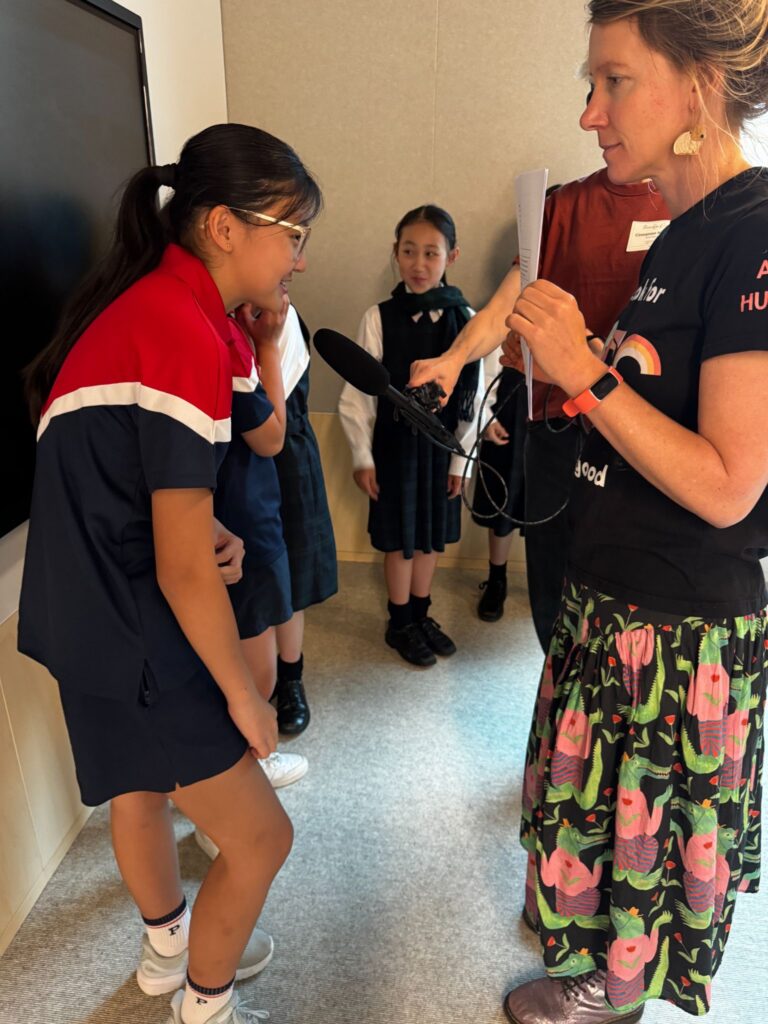
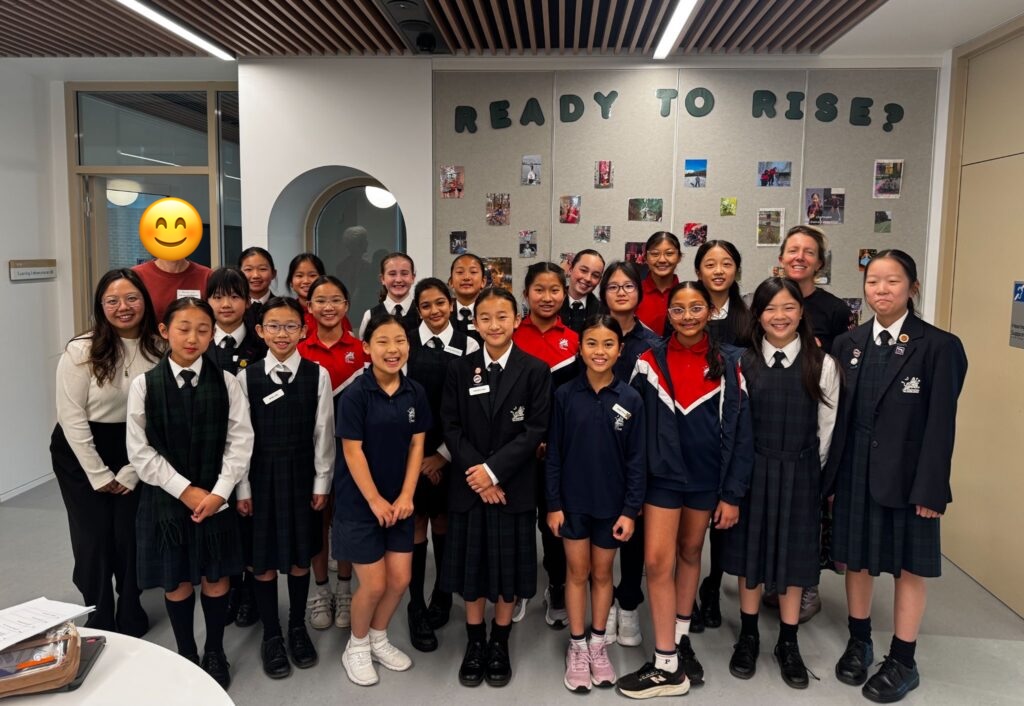
Together with guidance from Grow Your Mind, the students built practical tools for the moments when life inevitably goes sideways. Instead of spiralling into self-criticism or blaming everyone else after a setback, listeners learn to pause, acknowledge that this is genuinely hard, respond with kindness and then choose what to do next.
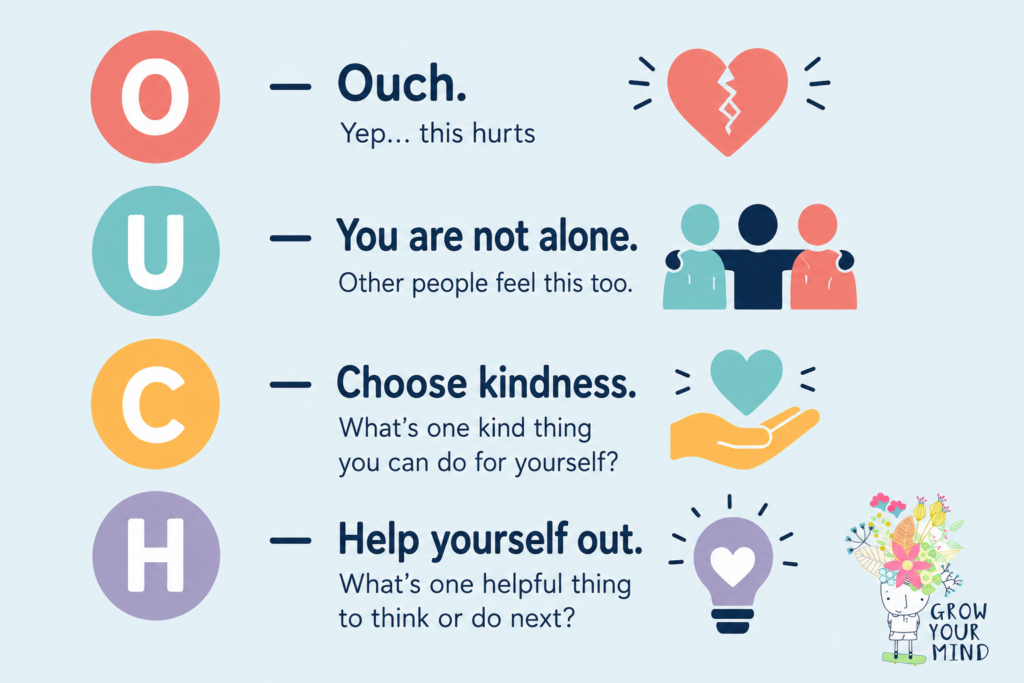
Here’s what we know: it’s incredibly difficult to hand out compassion you don’t first practise yourself.
From self to others: the Respect series
Once children have the foundations of self-compassion, the season turns outward. This process involved 40 primary school students from Gerringong Public and other local schools.
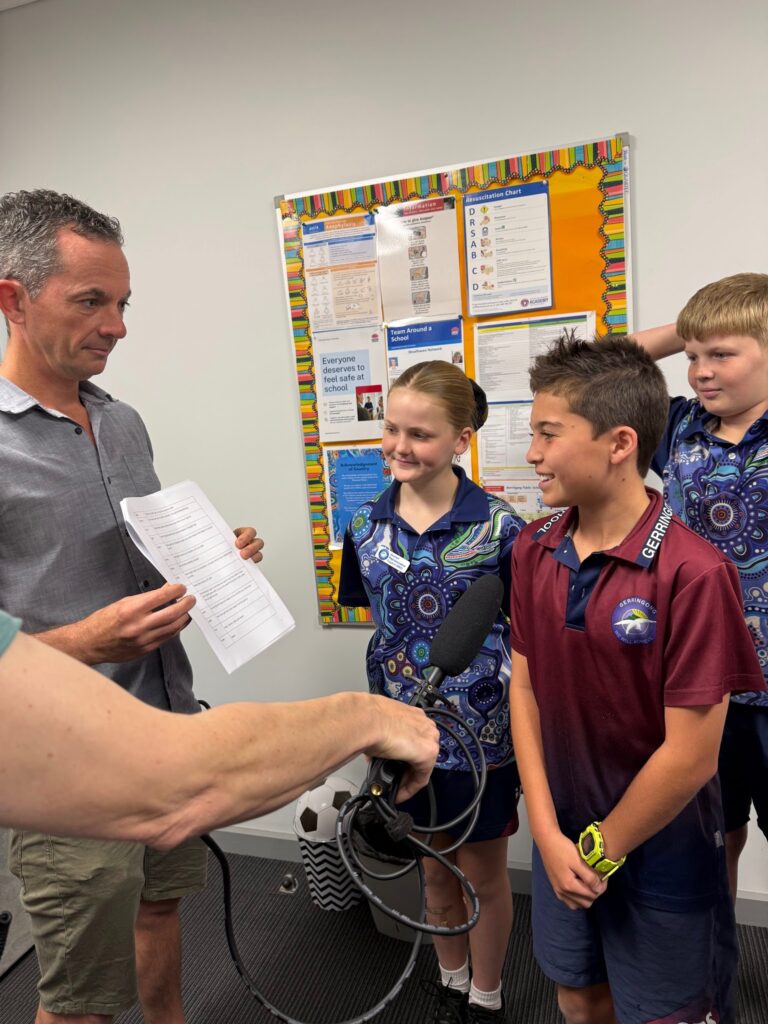
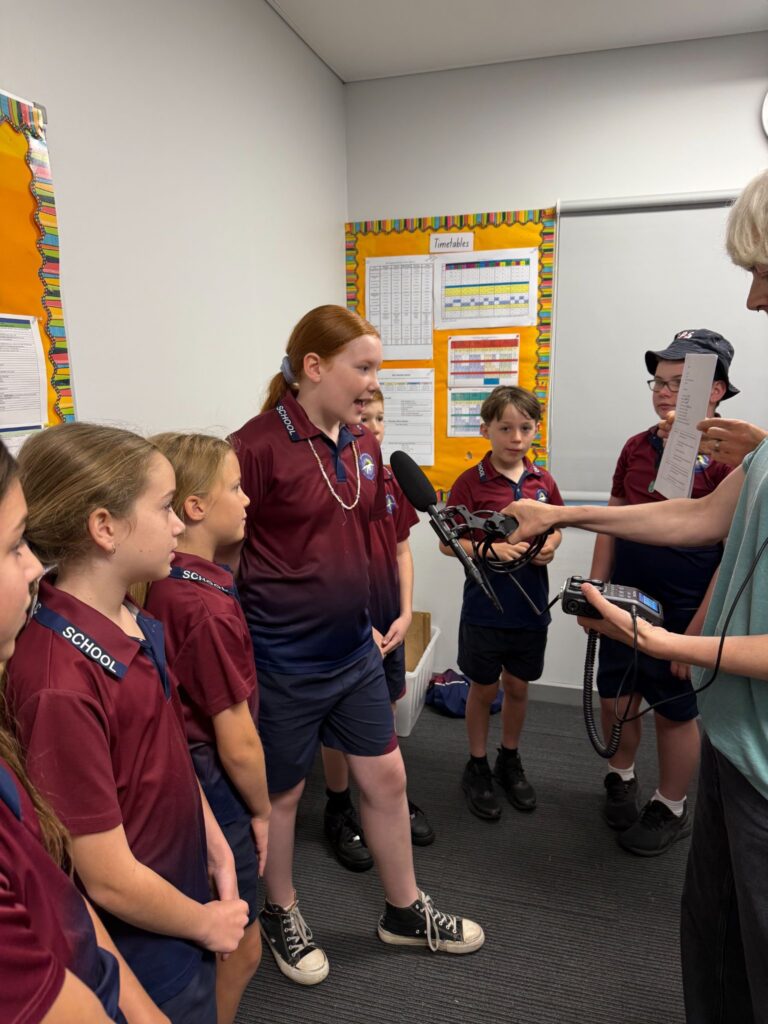
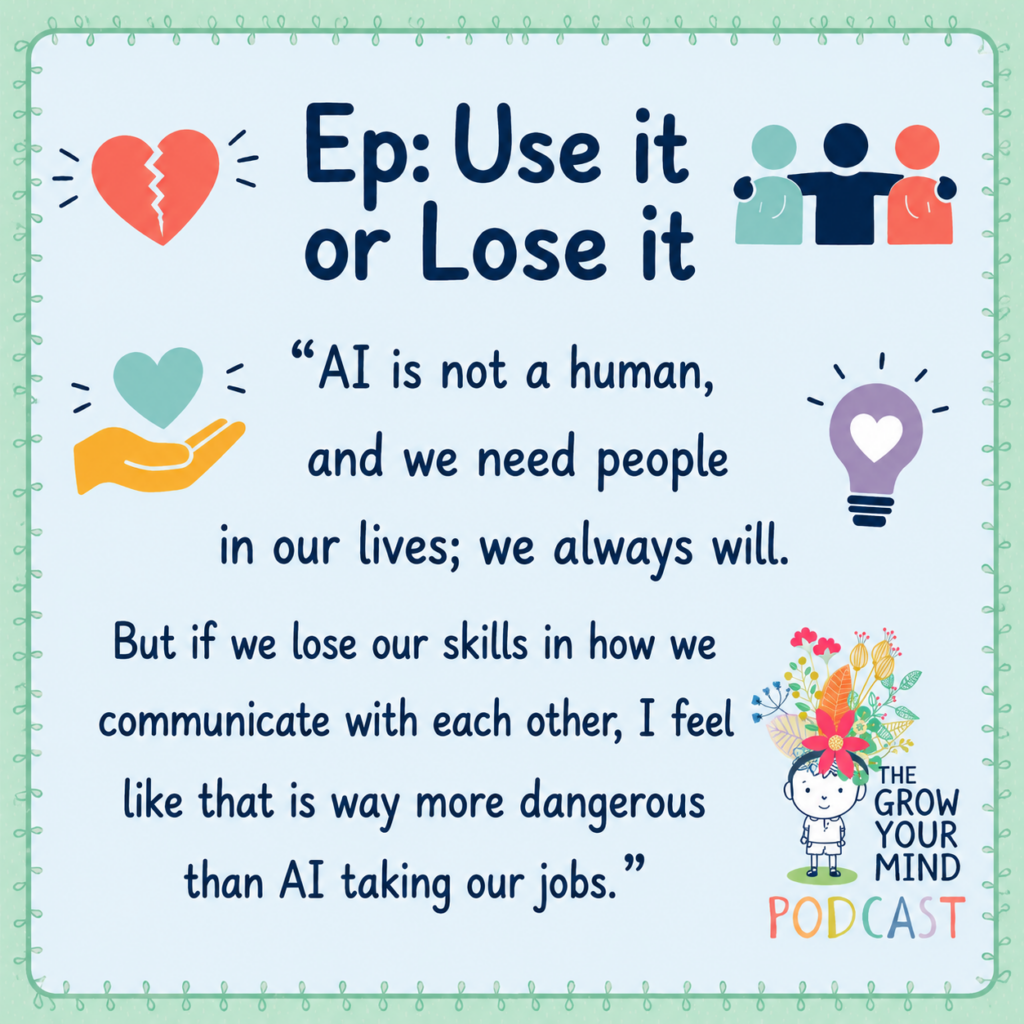
The next six episodes are all about respect, specifically, the everyday moments that quietly shape who we become. Should AI write your thank-you card or your birthday message, or is taking the time to write it yourself part of showing respect? What do you do when a fellow student is disrespectful to you on the school bus? Why does it matter so much to pause when something feels wrong, instead of joining in or looking away? And when we talk about boys, should the goal be to become a “positive man”, or simply a positive human?
Throughout production, teachers generously gave up their time to listen to episodes with their students, gather feedback, offer ideas from their own classrooms and even lend their voices as actors. Children told us what resonated, what felt real and what needed changing. That willingness to collaborate is why these conversations are authentic, practical and grounded in the realities of school life.
Before Season 6, we found ourselves asking a bigger question at Grow Your Mind: what role can primary schools play in preventing violence against women and helping build a more gender-equal future? We absolutely don’t pretend to have all the answers. But we do know this: prevention starts long before adulthood.
Then something interesting happened. Children started writing to us about the situations they were facing. Girls shared moments when they felt uncomfortable on the playground. Boys told us they were being disrespected on the school bus and didn’t know how to respond. Others wanted help navigating angry coaches, heated sporting sidelines and friendship conflicts.
That’s exactly where prevention lives.
Respect isn’t a “boys’ issue” or a “girls’ issue”. It’s a human issue.
Is respect between genders an issue in your primary school?
Around one in four Australian women (15-or-older) have experienced intimate partner violence. Those statistics don’t begin in adulthood. They begin with the everyday attitudes, habits and behaviours children learn while they’re young.
We know it might seem like a long bow to draw between a child being disrespectful on the school bus and violence against women. But when disrespect is ignored, laughed off or normalised, it sends a powerful message to every child watching about what’s acceptable. And every time a child or an adult respectfully speaks up, sets a boundary or backs someone else, it sends a different message:
This isn’t okay. And we all have a part to play.
Example reflection sheet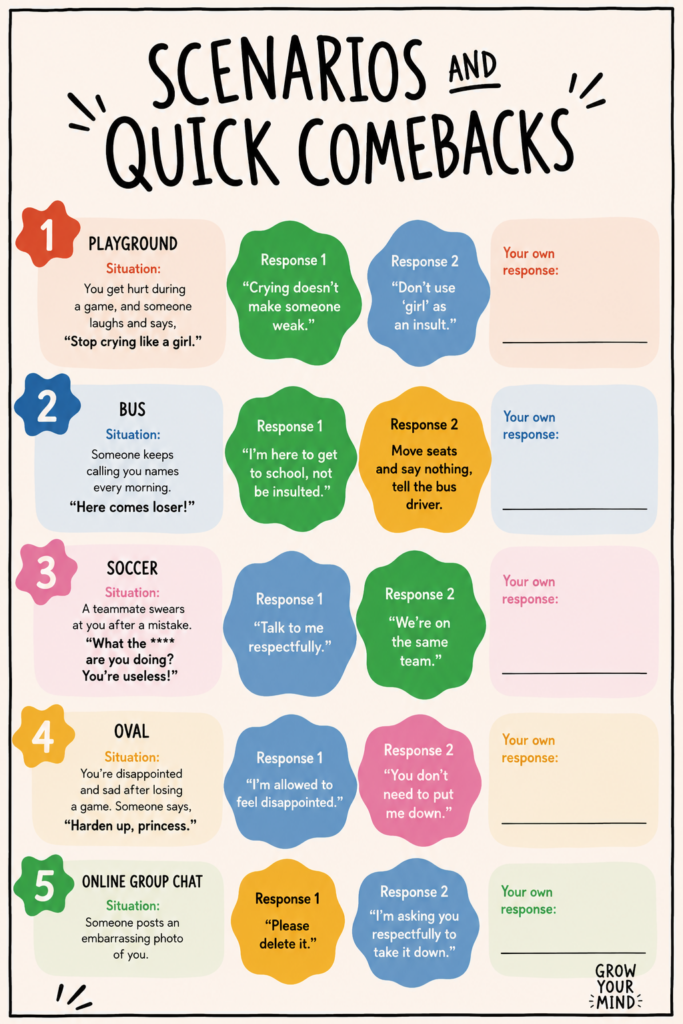
A role model worth listening to
Season 6 closes with a two-part conversation with former rugby league player, author and all-round legend Luke Bateman on what it really means to be a good human. Children often hear things differently when they come from someone outside their family or school — someone who’s lived a little, stuffed up a little and learnt a few things along the way.
Luke talks about how books changed his life, why real strength includes talking about your emotions, and why the people you surround yourself with matter. His greatest lesson, though, is beautifully simple: everyone is fighting a battle we know nothing about. We can’t control how other people behave, but we can always choose the kind of person we want to be.

Why podcasts matter
Children don’t learn wellbeing from one lesson, one assembly or one conversation. They learn through repetition, stories and shared language over time. That’s why these ideas need to live in books, classroom lessons, songs, journals, videos and podcasts. Different children connect with different ways of learning.
Podcasts are a particularly powerful vehicle because they’re so accessible. No logins. No complicated setup. No hours of preparation. Just press play. Listen in the car, during a classroom transition, while children draw, or before bed. Five minutes later, you’ve opened a conversation that might never have happened otherwise.
Want help using our podcast in your school environment?
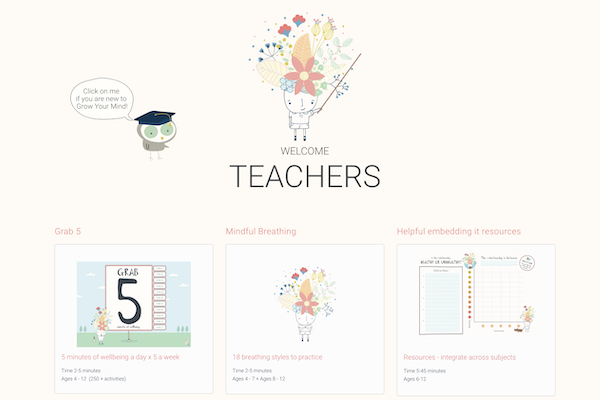
We also know teachers are incredibly busy and parents are juggling a thousand things, so we kept Season 6 simple. Each episode is short, engaging and asks one thing of you: press play. And if you’re one of our Grow Your Mind schools, every episode also comes with optional reflection questions and classroom activities to take the learning deeper.
We all have a part to play
Every child who learns to speak up for themselves, every teacher who plays an episode between classes, every parent who asks one good question at dinner — all of it is part of building a generation that can regulate, that can be kind, and that chooses respect rather than demanding it.
The message is powerful. It just needs to be heard, in every format we can get it into.
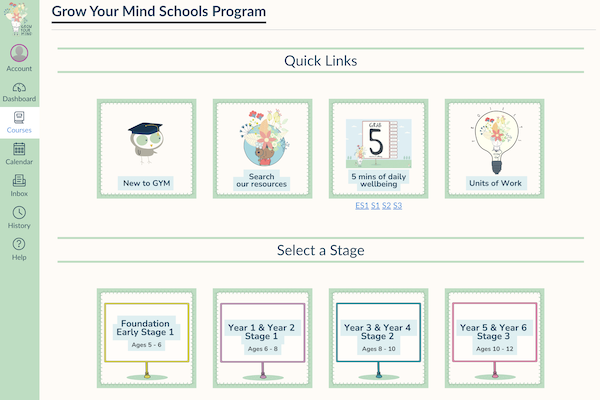
At Grow Your Mind, we don’t believe one book, one podcast or one lesson will change a child’s life. That’s why we’ve built an ecosystem of support: classroom units, an online wellbeing platform, free podcasts, books, parent workshops and professional learning for educators. Different children, families and schools need different entry points, but the goal is always the same: to make wellbeing practical, accessible and part of everyday life.
Anyway. That’s our attempt at making the world a little kinder. Imperfect? Absolutely. Worth a crack? We reckon so.
Contact us to find out more about our award-winning wellbeing program