5 things parents can do at home, 3 areas to focus on using the Grow Your Mind curriculum
There’s the usual debate happening right now about who’s to blame in response to distressing news of sexual assault and the ongoing, horrendous statistics on violence against girls and women. At Grow Your Mind, we don’t believe blaming only parents, only the school, or only the algorithm will create meaningful change. Instead, we take a whole-school approach: all of us, working together, can be a power for good.
We lose our potential for positive influence the moment we start thinking it is somebody else’s role to play.
Here’s the maths: by the time a child finishes primary school, they’ve spent close to 7,000 hours in a classroom. Five days a week, forty weeks a year, for seven years, absorbing what’s modelled and what’s tolerated. Yes, parents shape a child more than anyone else ever will, but schools are the single largest chunk of a child’s waking life outside the home. Surely we can all agree that this time isn’t neutral. Surely we can see that schools have the power to help children grow into kind, respectful people.
Prevention works best when the people who spend the most time with a child, at home and at school, are doing the same quiet, repeated work, and doing it long before anything goes wrong. That’s the legwork schools are positioned to do daily, in a way no single household can replicate alone, not instead of parents, but alongside them.
That’s exactly why Grow Your Mind is a whole-school wellbeing program, not a single lesson, an incursion, or a once-a-year assembly. Respect, empathy, and consent education need to live in daily habits across a whole school community.
So here’s what that looks like from both sides, starting with HOME:
In an interview with ABC, I shared that these conversations don’t have to be scary.
Here is a snippet:
And here is the link to the full interview
As a parent of boys, you might be thinking, ” My boy would never…”, as a parent of a girl, you might be thinking, “How do I protect her?” Denial and fear can cause inertia. Doing nothing is not passive. Staying silent when you hear something inappropriate, or letting the moment pass without reminding your child about empathy, boundaries, or consent, isn’t neutral either. It’s an active choice, and silence is what lets the problem keep going.
There are other paths we can take. There are things we can do as a parent to help our boys and girls lead with empathy, to be an upstander, and to be kind. Our team wanted to share what that looks like. Here are 5 simple things you can do at home, and it only takes 5 minutes to watch.
However, for five days a week, several hundred days a year, your child is somewhere else, and that place has work to do as well.
Schools offer a captive audience
Schools offer a captive audience of individuals with the capacity to have their attitudes challenged, and that’s not a burden to put on teachers alone. Our Watch calls schools “powerful hubs with the potential for positive influence,” and that’s exactly what they are: not the whole solution, but one of the best-placed parts of it.
It starts with empathy, not fear
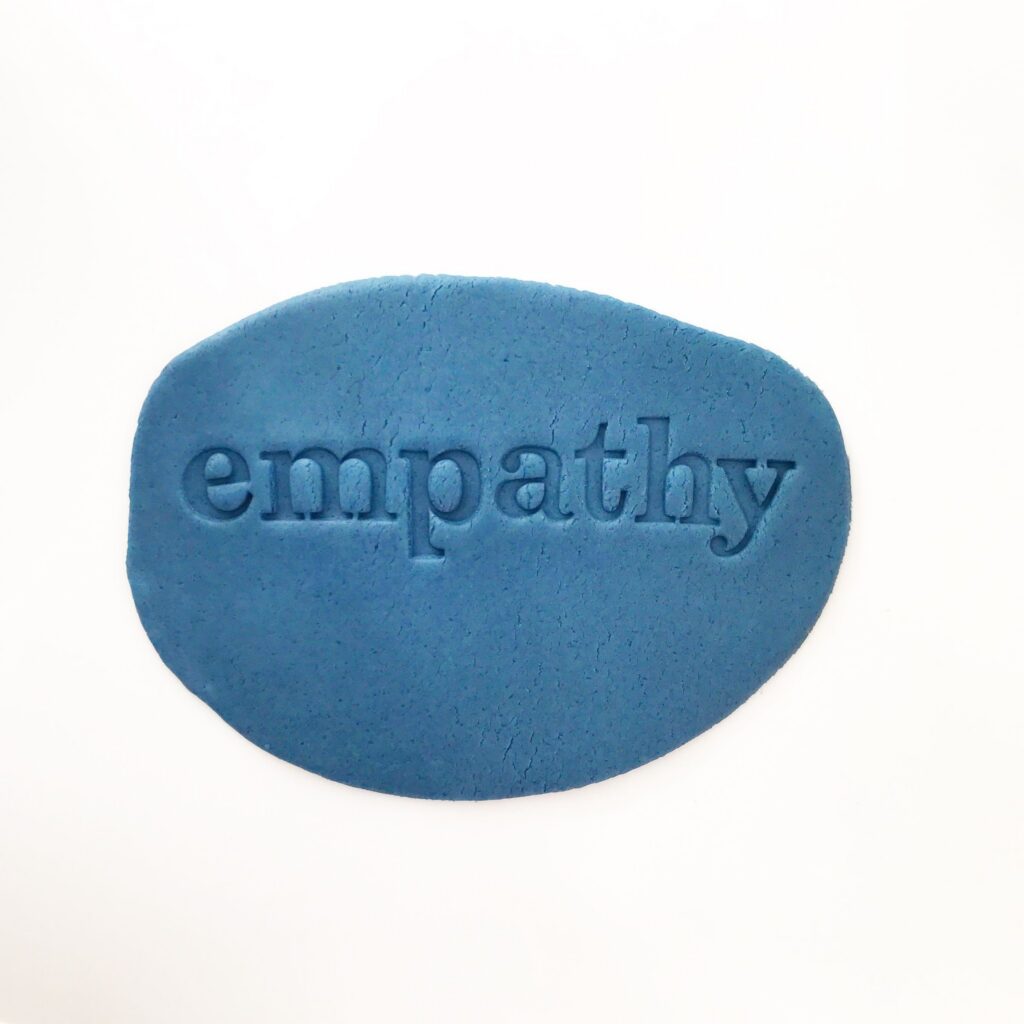
As consent educator Chanel Contos has argued, sexual assault, at its root, can happen when entitlement outweighs empathy. This isn’t about frightening children with worst-case scenarios; it’s about tipping the balance, early, toward empathy, in how they treat others and how they treat themselves. A child constantly told they aren’t kind, capable, or worthy of respect has little compassion left to offer anyone else, which is why self-compassion is the foundation of respectful relationships education, not a soft add-on.
The stakes are real, and rising. University of Melbourne research recently found nearly one in three teenage boys believe efforts to give women equal opportunities have “gone too far,” and national data now shows more children experience sexual abuse from another adolescent than an adult, a reversal of the pattern seen a generation ago.
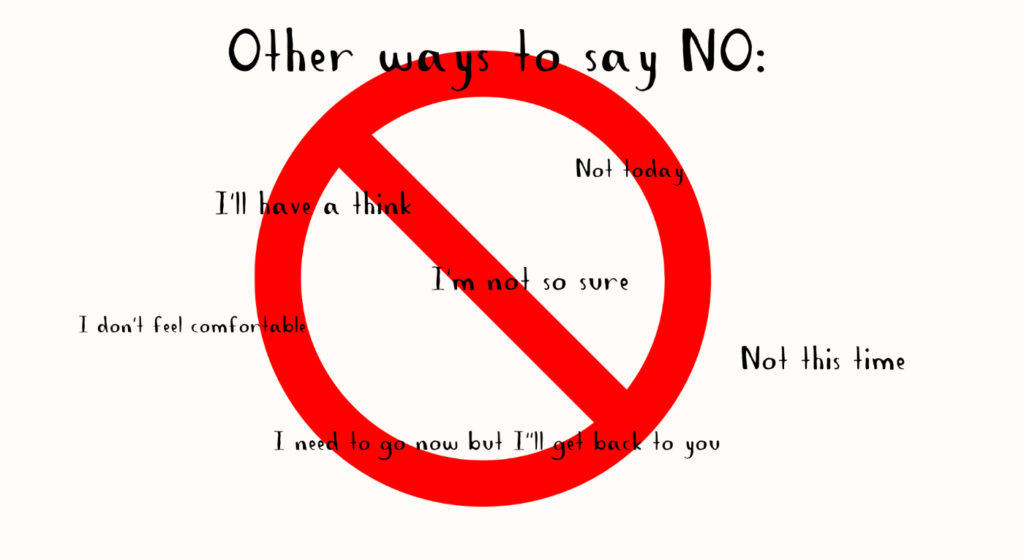
That’s why our consent education starts in Kindergarten, not high school: learning to understand and respect a no, not just to say it, but to hear it and let it stand, even when that feels uncomfortable. It does feel uncomfortable, and we don’t skip past that; we name it, because that discomfort is the whole point. Respect isn’t a boys’ issue or a girls’ issue either; it’s a human one: every child is learning to notice how someone else feels, manage their own big emotions, and find the courage to speak up.
Prevention is a culture and a curriculum
A decade in this work has taught us that most schools don’t have a knowledge problem; they have a culture and consistency problem: the best curriculum in the country won’t shift anything if it lives in a folder that only comes out once a term. Culture is built in small, repeated moments: the greeting at the door, whether kindness is the norm, whether adults model fair conflict and genuine respect. Children see. Children do.
That’s why the two aren’t in competition. Curriculum gives a school the shared language, consent, empathy, self-compassion, and respect. Culture is what makes it stick. You need both.
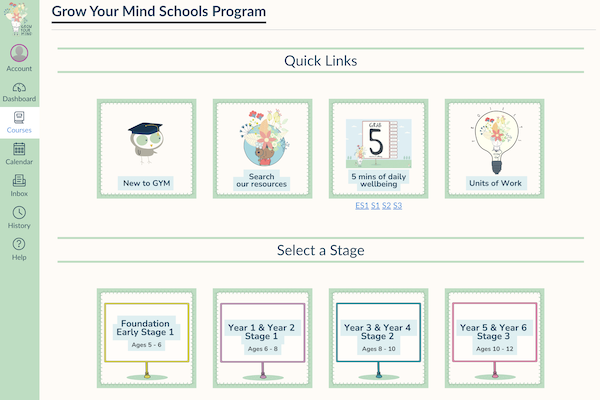
Here’s where to find this in your Grow Your Mind School program
We’ve done the work for you. Here are three areas of the Grow Your Mind platform already built to help you teach respectful relationships and consent education, and how to use them.
1. Grab 5
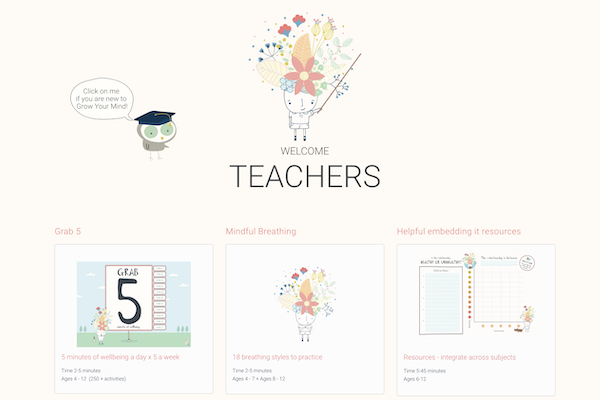
One of the easiest things you can start doing today as a classroom teacher is to use our Grab 5 resource. Each day of the week builds a different social and emotional skill, and every activity takes less than five minutes. Positive habits are built through repetition and small daily moments, not long lessons, and there are four terms’ worth of daily activities to draw on.
A snapshot across the primary years:
Example: Grab 5 for Kindi. This term’s themes include emotional regulation, working through playground conflict, expanding emotional vocabulary, and building a positive classroom culture.
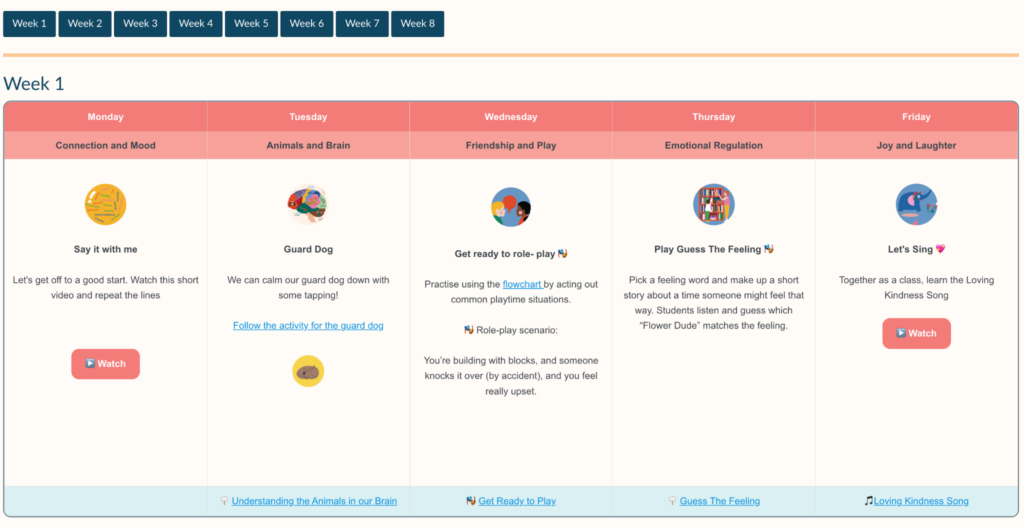
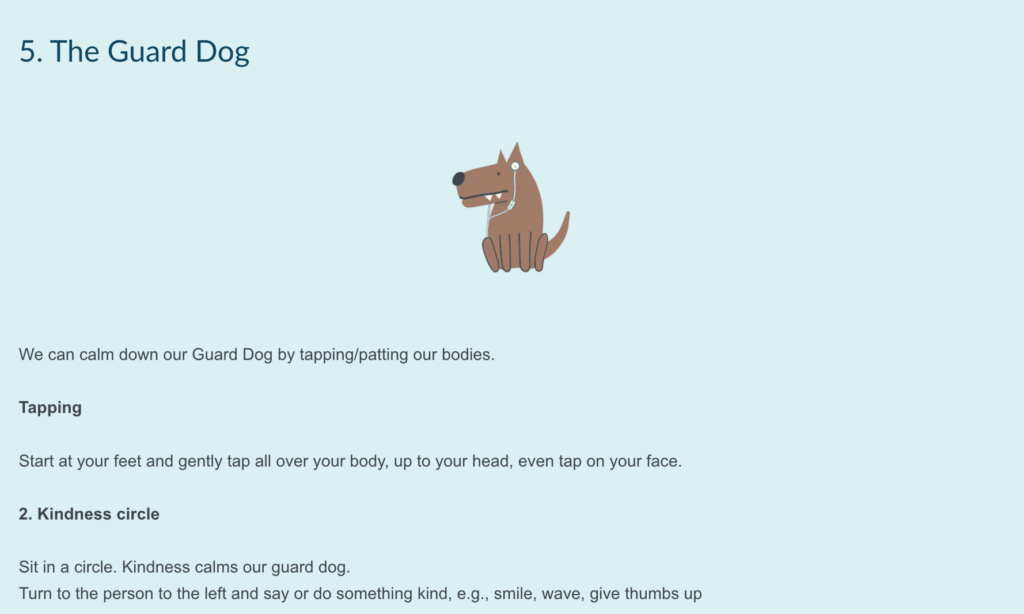
Let’s zoom in on the Guard Dog activity from Tuesday:
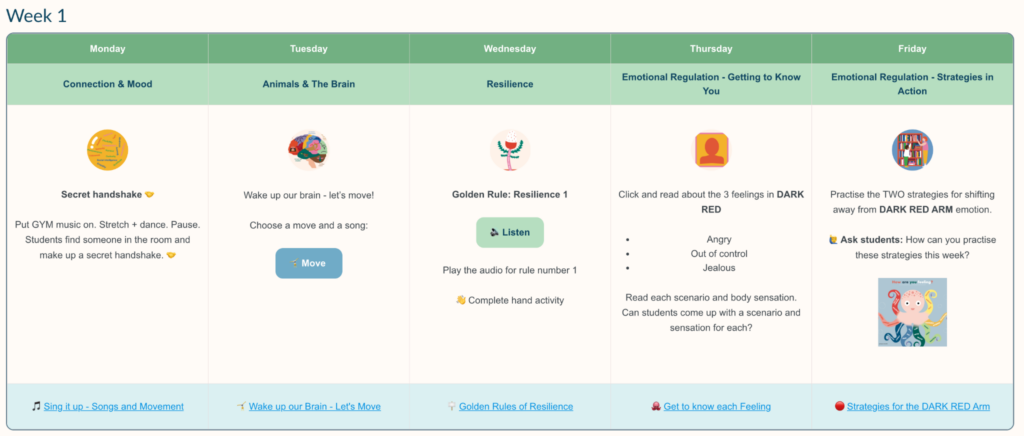
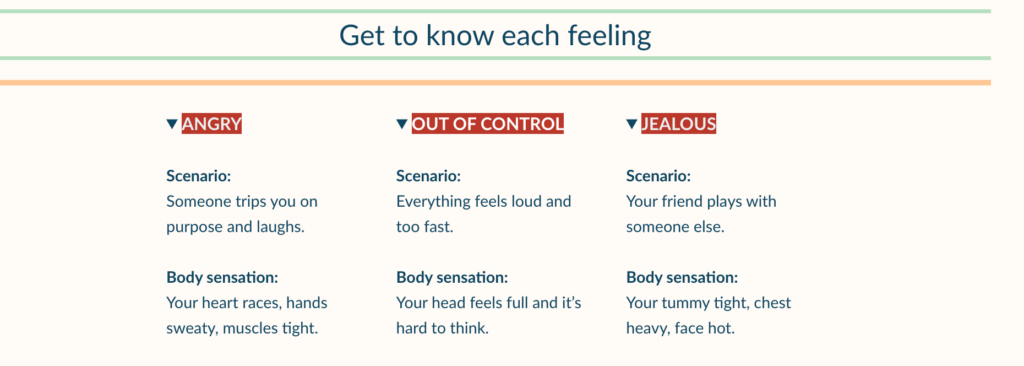
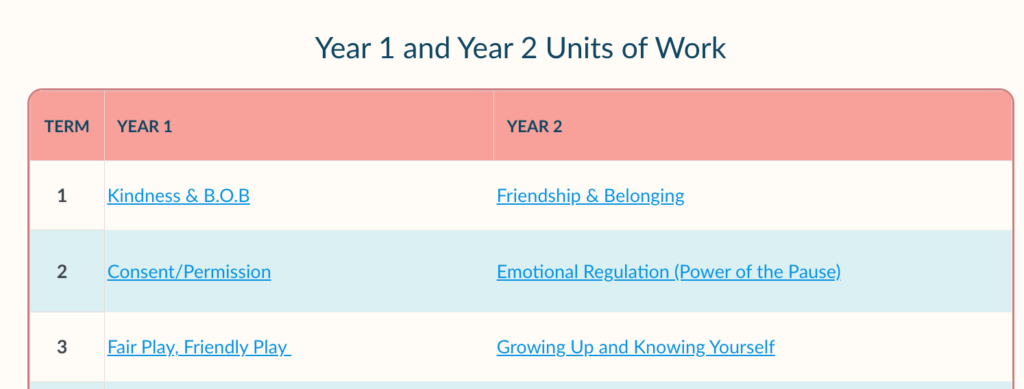
Grab 5 Year 1 – 2 Themes shift to connection, resilience, emotional regulation, and getting to know each feeling, a critical part of both respectful relationships and consent education.
Let’s zoom in on Thursday: Emotional Regulation:
Year 3 -4 Grab 5 snapshot of a week: There is a focus on positive affirmations, goal setting, and using character strengths for good, alongside the basics of neuroscience and how it helps students persevere and manage their mood. These daily habits build the skills children need to make kind, calm, compassionate decisions, and character strengths in particular are the building blocks of being an upstander.
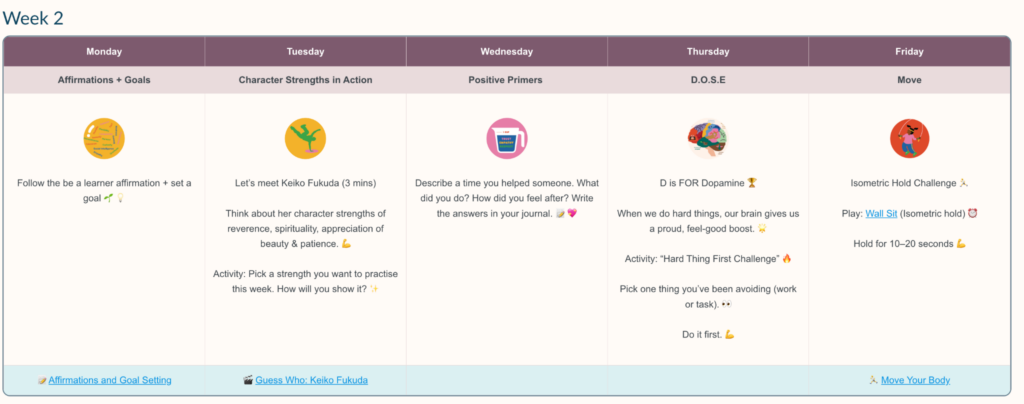
Let’s zoom in on Monday, Affirmations and Goals:
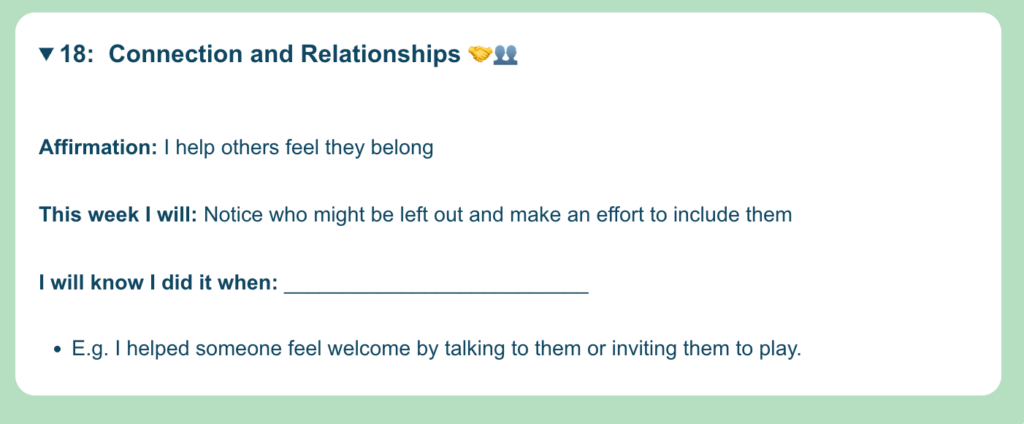
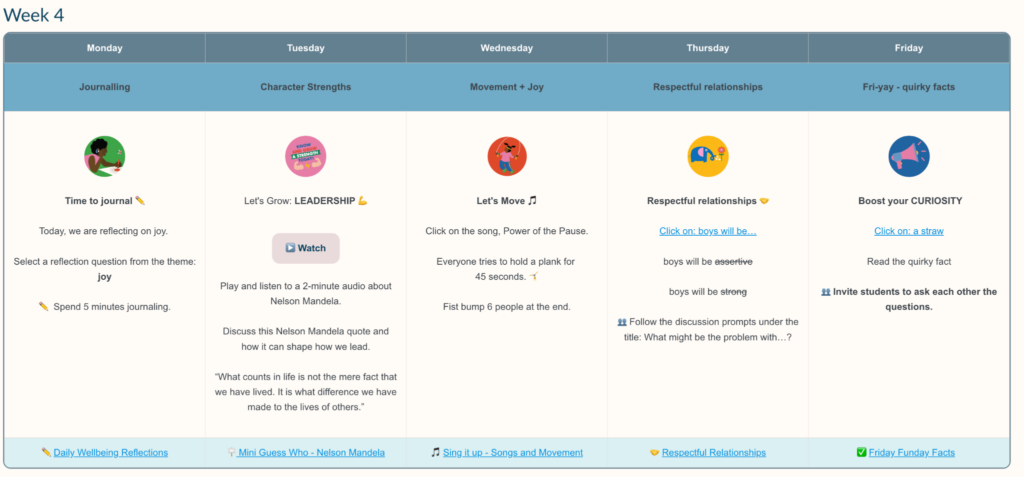
Years 5 – 6 snapshot of a week: the focus moves to journaling, explicitly teaching respectful relationships, encouraging curiosity, and applying character strengths to being helpful and brave
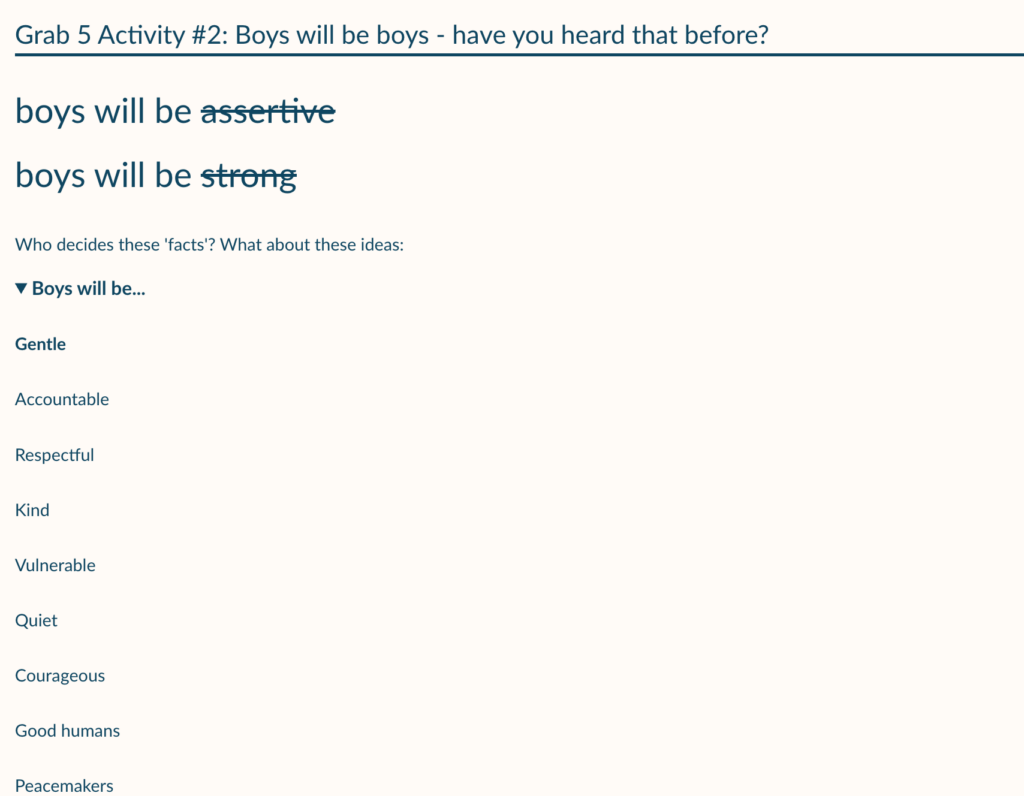
Let’s zoom in on Thursday: respectful relationships:
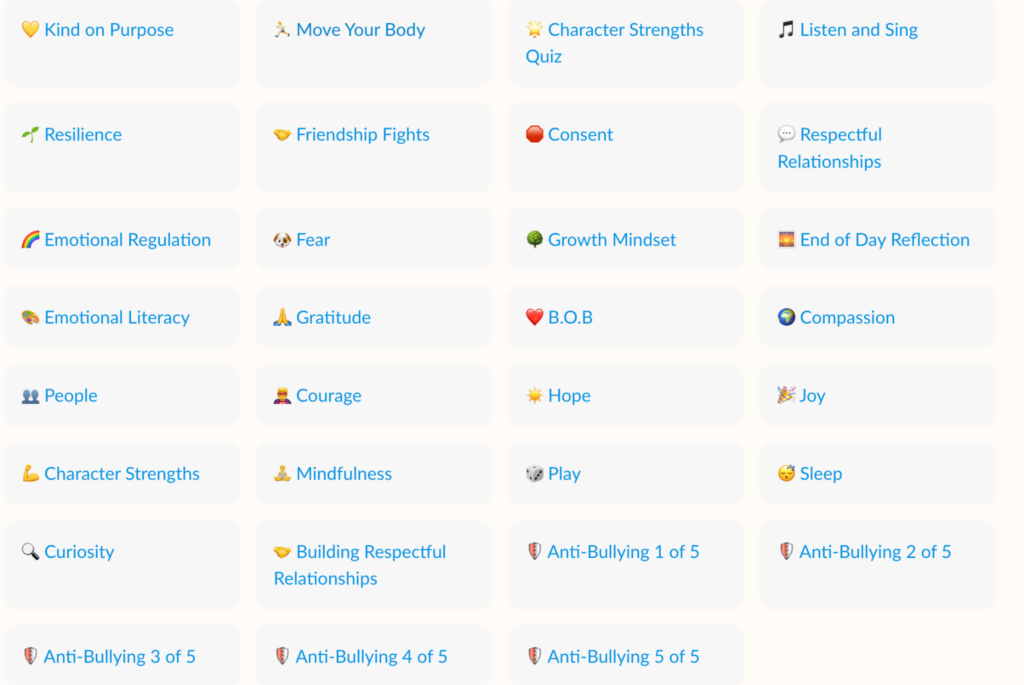
Journaling is another simple, powerful way to get students reflecting on kindness, compassion, respect, and emotional regulation. We have 155 journal prompts for upper primary students, some built into Grab 5, others you can use on their own.
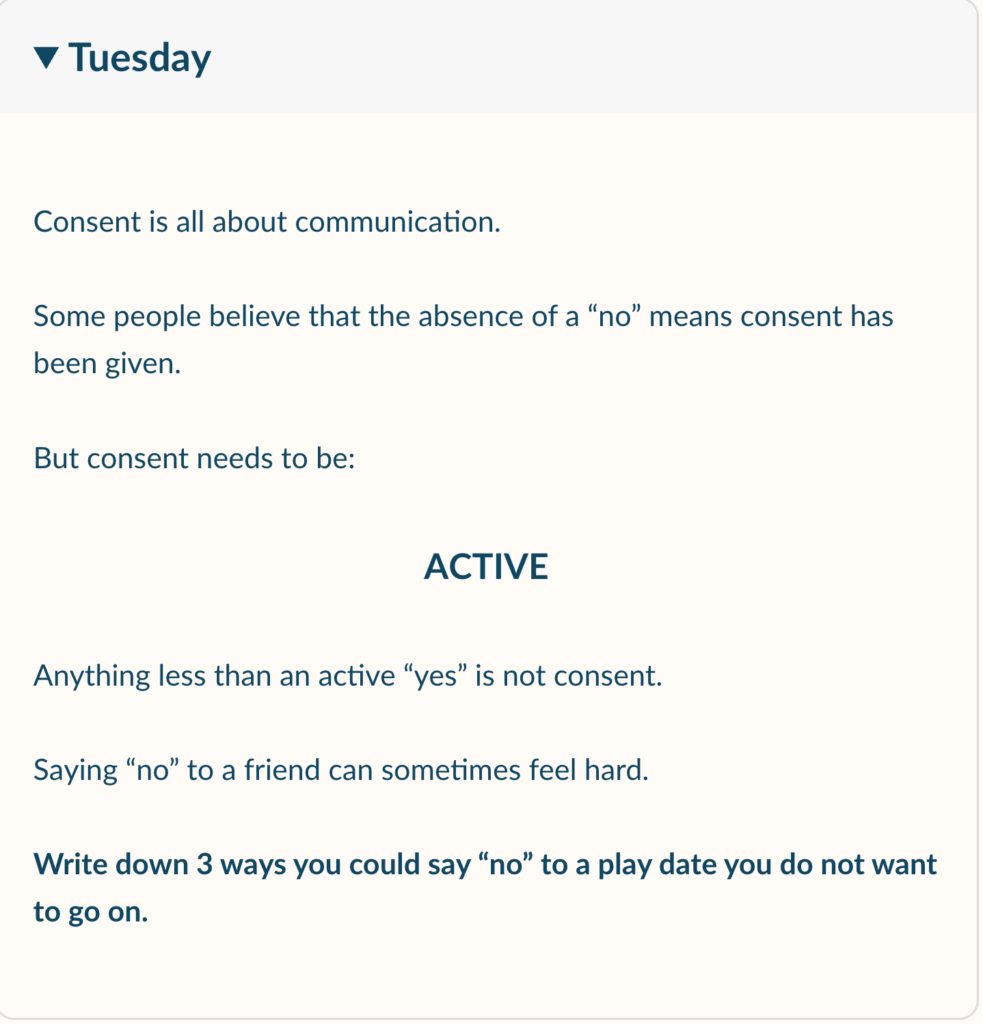
Example of Consent journal prompt:
2. The Grow Your Mind Podcast – upper primary
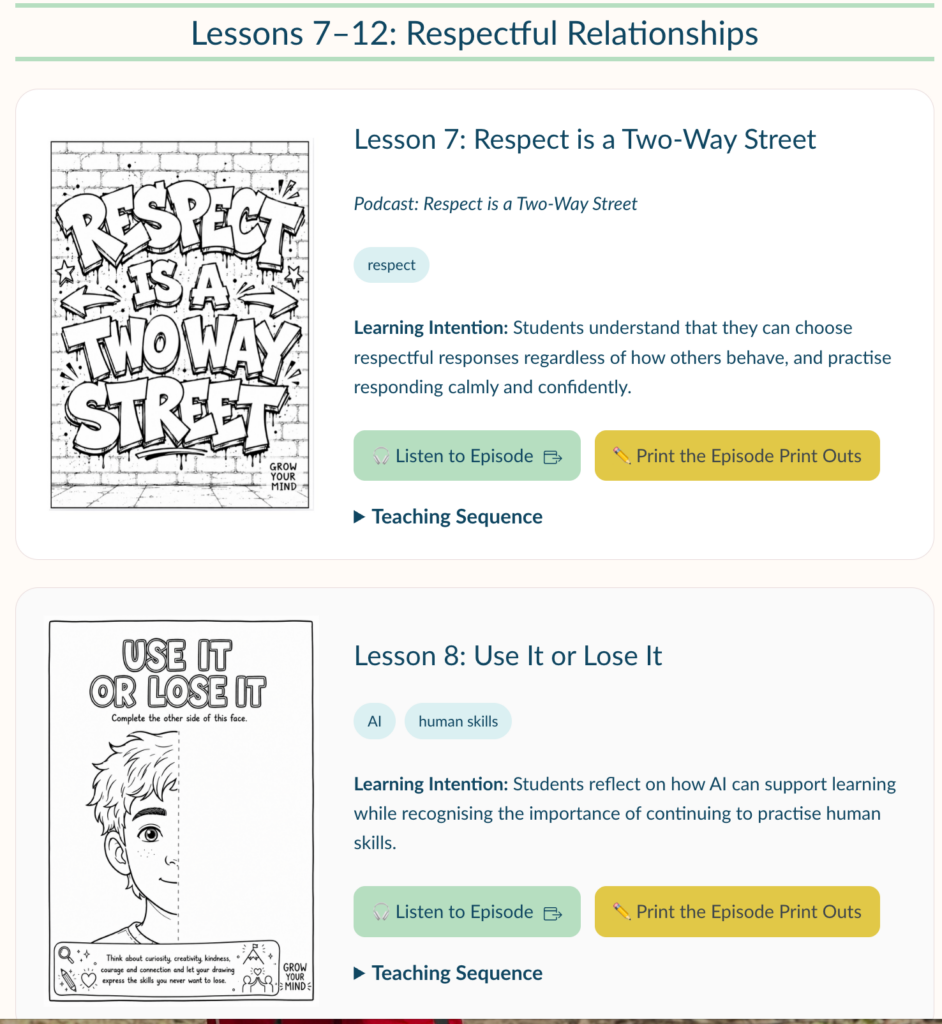
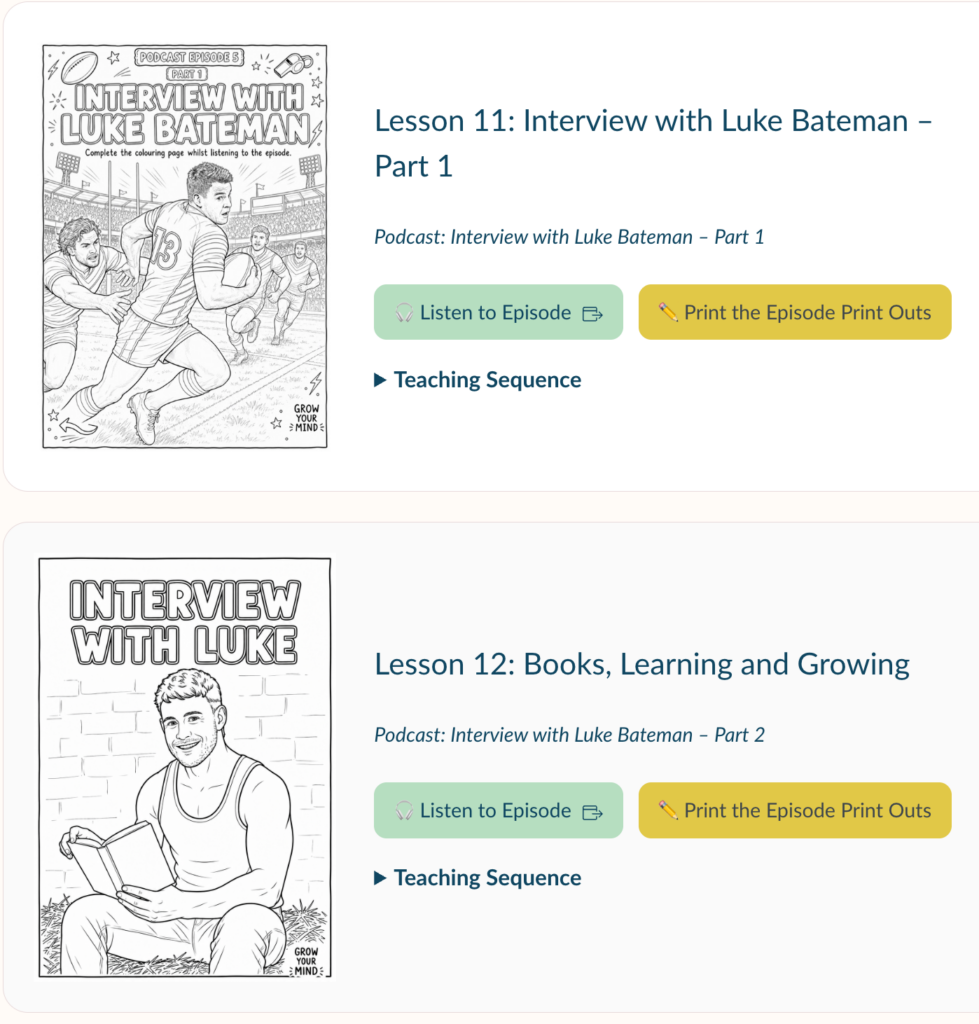
Each episode runs under ten minutes and comes with its own teaching sequence. Season 6 has a strong focus on respectful relationships, including a two-part interview with former NRL player Luke Bateman on what it means to be a positive human.
Here is the audio teaser:
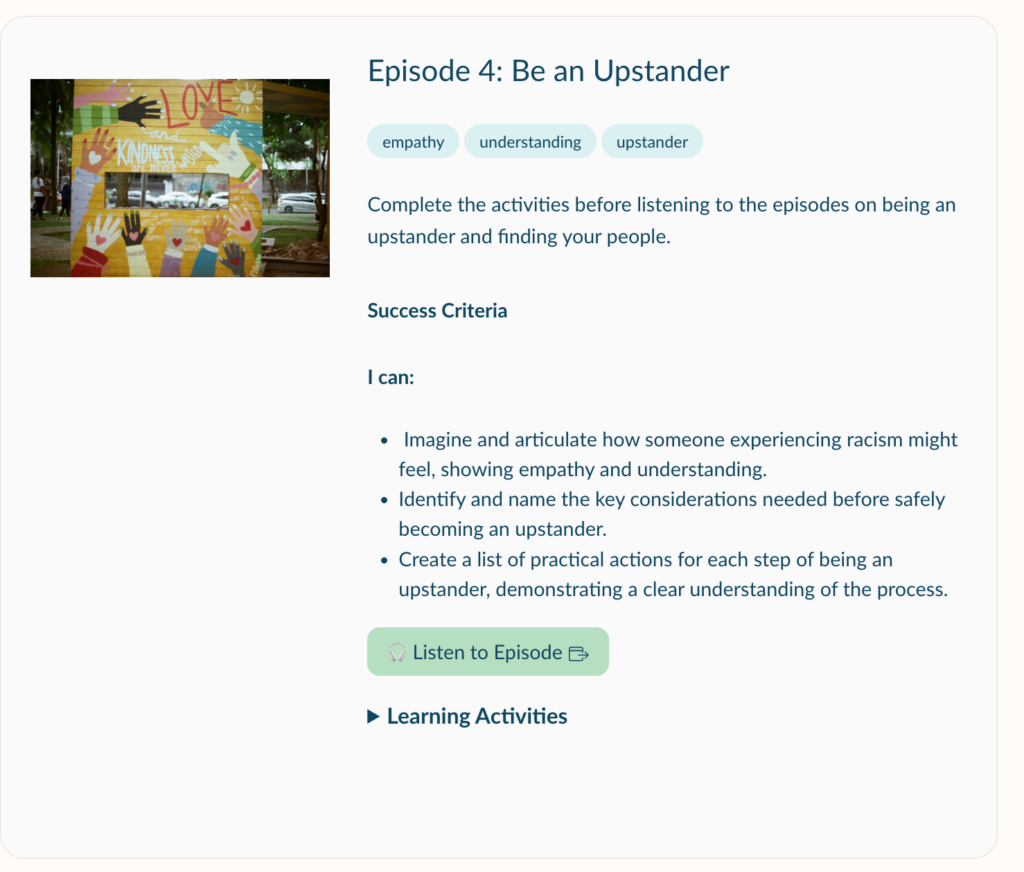
Other seasons support respectful relationships and consent education too, and more broadly build a culture where children know how to stand up against wrongdoing, like Season 5: Be an Upstander.
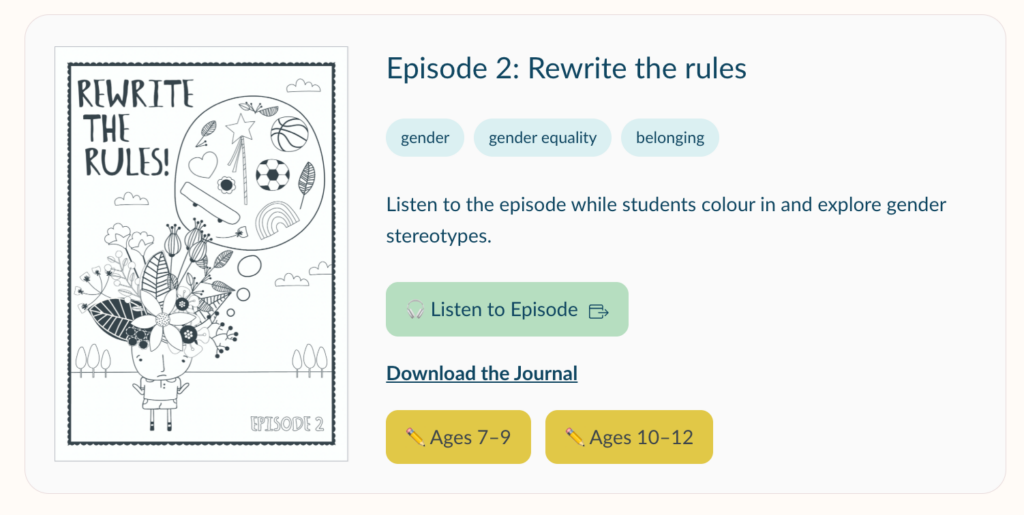
Younger students benefit from the podcast as well; the first two of our six seasons suit Year 2 and up, including Rewrite the Rules, a standout episode helping kids understand the impact of gender stereotyping.
3. The Grow Your Mind Units of Work
It is mandatory for all Australian schools to teach age-appropriate
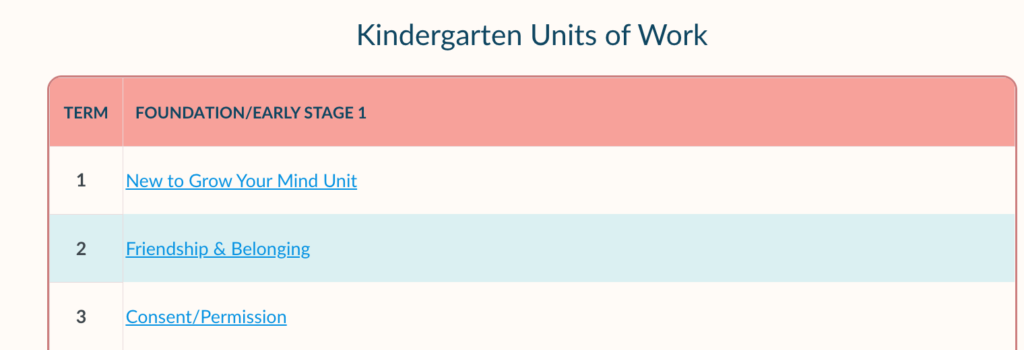
consent education & respectful relationship education from foundation to Year 10. At Grow Your Mind, we’ve got you covered with curriculum-aligned, high-impact content for respectful relationships and consent education, from Kindergarten through Year 6. We have lesson plans, slides and assessment opportunities.
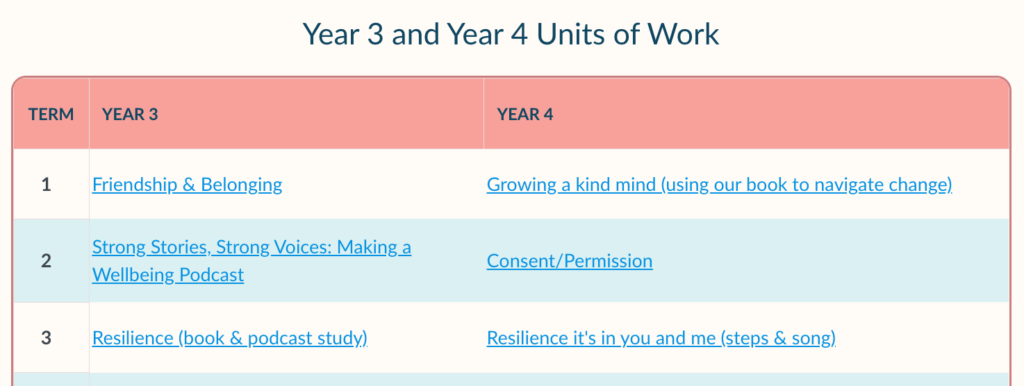
Here is a snapshot of each Year Group and their learning journey:
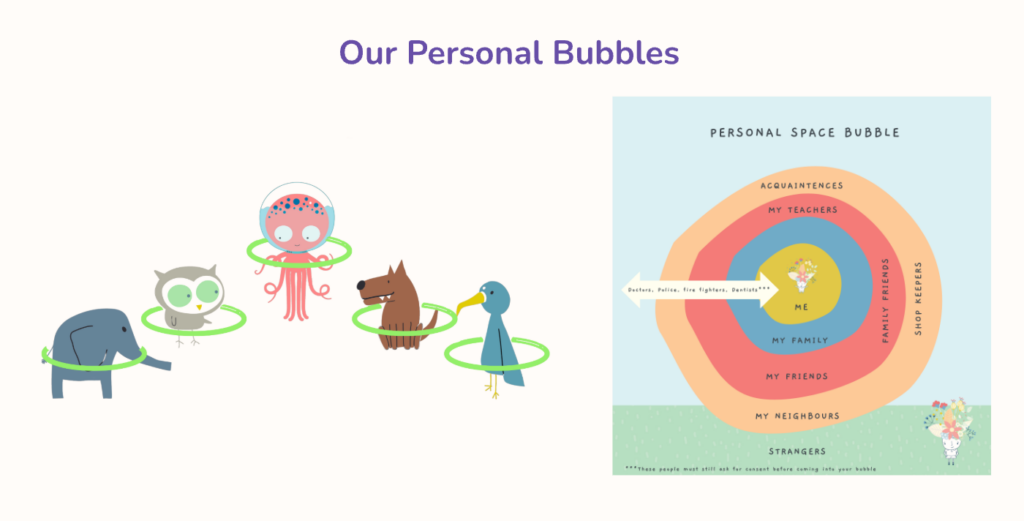
See example content about personal space bubbles:
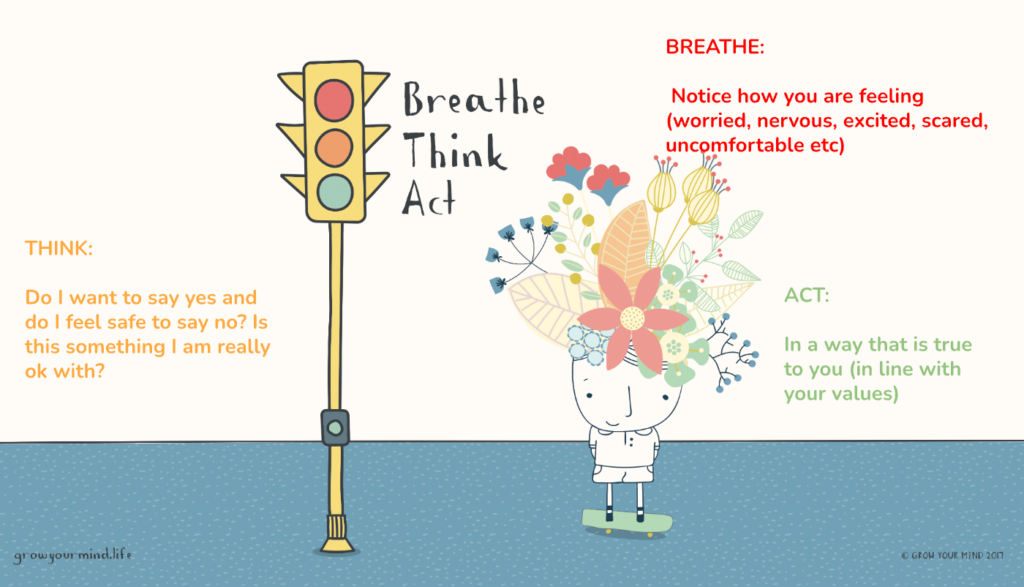
See example content of emotional regulation + body awareness
See example content from the consent unit:
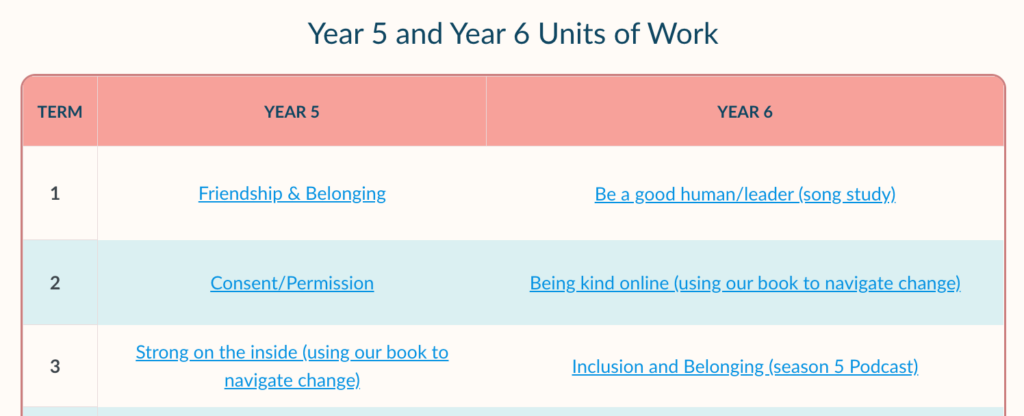
Example content from Year 6 Be a good human/leader
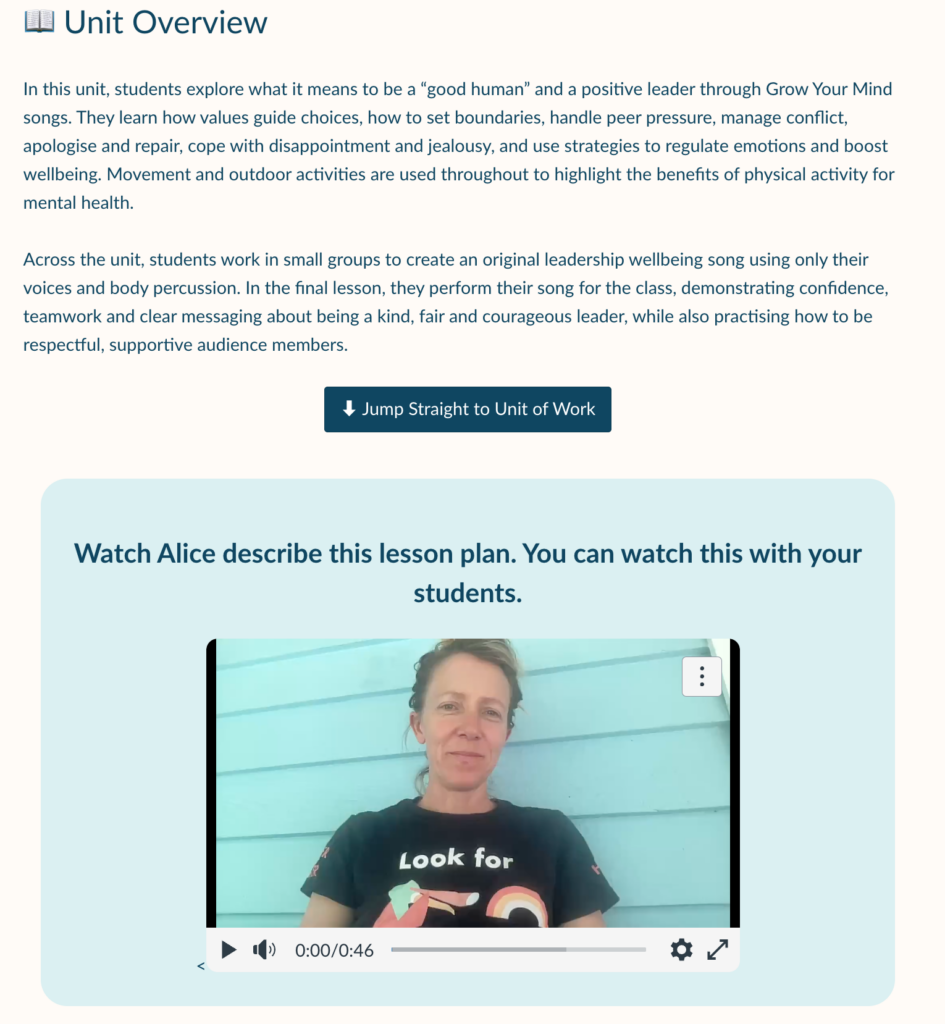
The content is there ready for you to teach. What matters now is using it in your classroom, in the staffroom, and in the way you treat each other.
Want to get more out of the program?
So let’s rock a bit of Brené Brown and get a little awkward, brave, and kind about it, parents and schools alike. And then mix it with some of the legendary Dolly Parton vibes: “You’ll never do a whole lot unless you’re brave enough to try.”