
“Hey, Grow Your Mind, we use your program. We’ve got the posters, the units, and the podcast on a weekly rotation. The kids love it. But our leadership is struggling. Staff are burnt out. Parents are… a lot. What I’m trying to ask is: how do we actually create a positive culture across the school and home?”
Safe to say, we’ve received versions of this message from teachers over the past 10 years.
But in the last few years? They’ve ramped up.
There’s a feeling you get almost instantly when you walk into a school with a positive culture. It’s hard to put your finger on, but you can feel it. (And let’s be honest, you definitely know when something feels off.) When we toured nationally last year, we could tell within five minutes whether a school had a good vibe or not.
Comedian Ben Knight has a great segment about being a substitute teacher, claiming you can tell what kind of day you’re in for just by the posters on the wall. If it says “Be the rainbow in someone else’s cloud,” you’re cruising. If it says “Make good choices,” well… buckle up.
If only building a positive culture were as simple as putting up a few feel-good posters, we’d all be laughing.
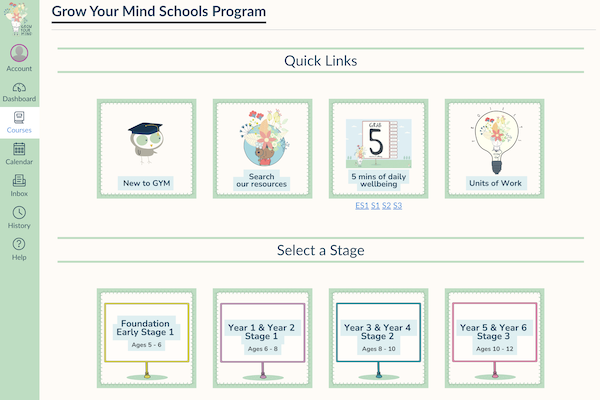
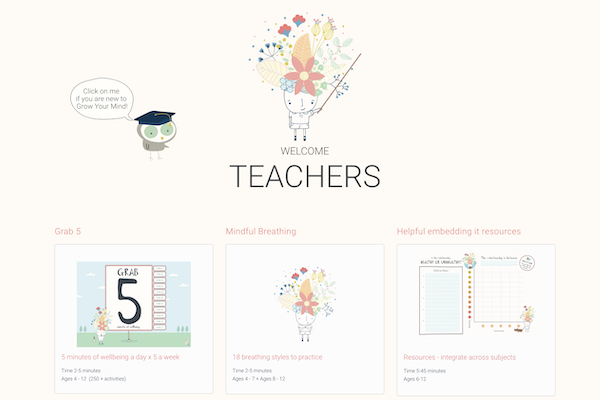
And here’s the thing… We provide those beautiful posters to schools, and we know we have one of the best wellbeing programs in the world. And yet simply having our program is not enough. Shameless plug, we really do have a brilliant program:
- 🎙️ An award-winning children’s podcast with student voice at its core.
- 📖 A best-selling children’s chapter book about embracing imperfections, choosing kindness, healthy friendships and helpful mindsets.
- 🌱 An online program with over 600 wellbeing activities that can be used in under 5 minutes + full lesson plans and 21 units of work.
- 🎓 Professional development to help teachers learn how to prioritise their own wellbeing, deal with conflict productively, handle tricky moments with parents, and understand how to use our program.
- 🌟 Beautifully designed, ready-to-use physical resources that make a strengths-based approach the gold standard and easy to access throughout the day.
We also know we are having an impact. In 2021, an external evaluation of the Grow Your Mind schools program was completed by the Psychology Department at The University of Wollongong. The results were very compelling and highlighted that students who had access to the Grow Your Mind program showed the following:
- 🙅♂️ reduction in negative affect
- 🤸🏻♂️ positive gains in physical and psychological wellbeing
- 👨🏾🤝👨🏼 an increase in the quality of the child’s interactions with others, sense of connection, belonging and engagement.
📄 To read a summary of the evaluation project results, please click here.
With our program, students can name emotions. They get resilience. They learn what a healthy vs. an unhealthy friendship is. Great. But how do we turn that into a full-school vibe, where kindness isn’t just a lesson, it’s how everyone shows up… kids, staff, and parents included?
So what can YOU do?
Actually, a better question to ask is: what do you believe you can do? As John Hattie (2023) reminds us, what really makes a difference isn’t just what teachers do; instead, it is the belief educators hold about their shared capacity to make a difference. It’s the “we’ve got this” feeling. Most schools don’t have a knowledge problem. They have a culture and consistency problem. A positive culture isn’t built from what we say we value; It’s what students and staff experience every single day, how people are spoken to, how conflict is handled. And whether people feel seen, safe and respected.
For example, there might be a poster on the wall about kindness, but when students witness disrespectful interactions between adults or toward students, the lived culture undermines the message.Leaders shape culture, but they don’t own it. Every person in a school contributes to it. So what can you do, as one teacher? You go micro. Because culture is built in the small, repeated moments and behaviours of everyday life.
Here’s your cheat sheet: 10 ways to build a positive culture from your classroom outwards.
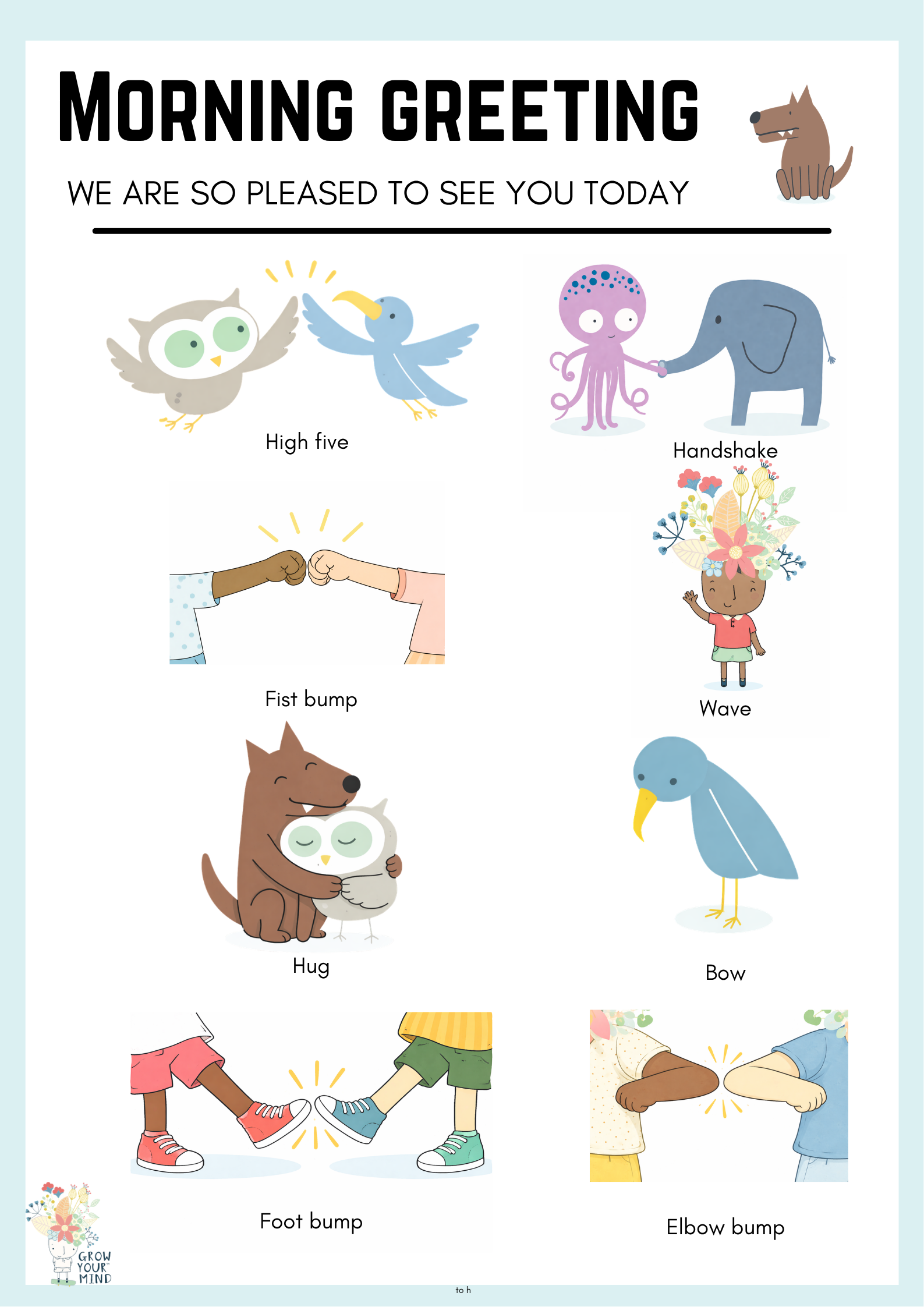
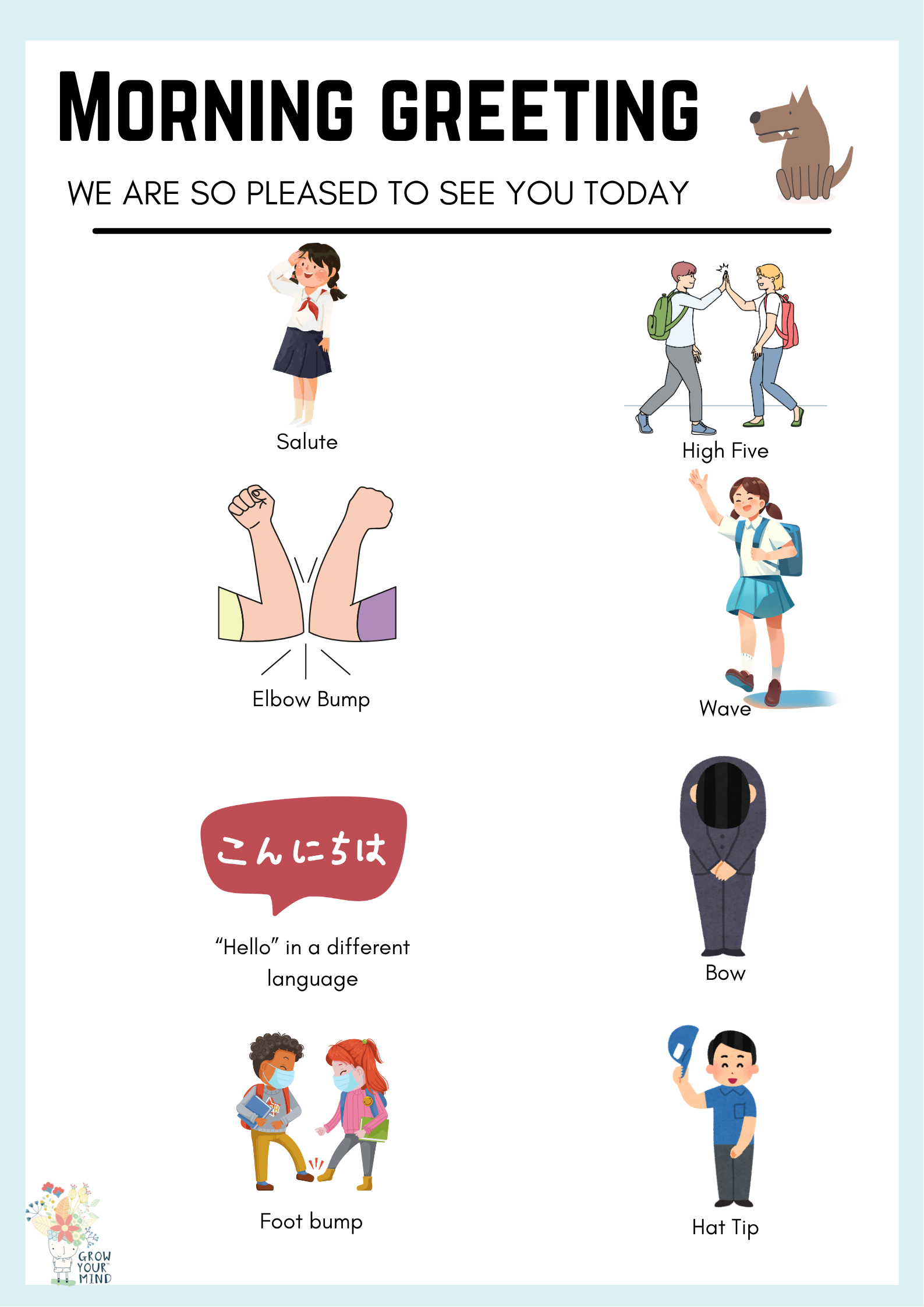
1. Greet every student like they matter (because they do)
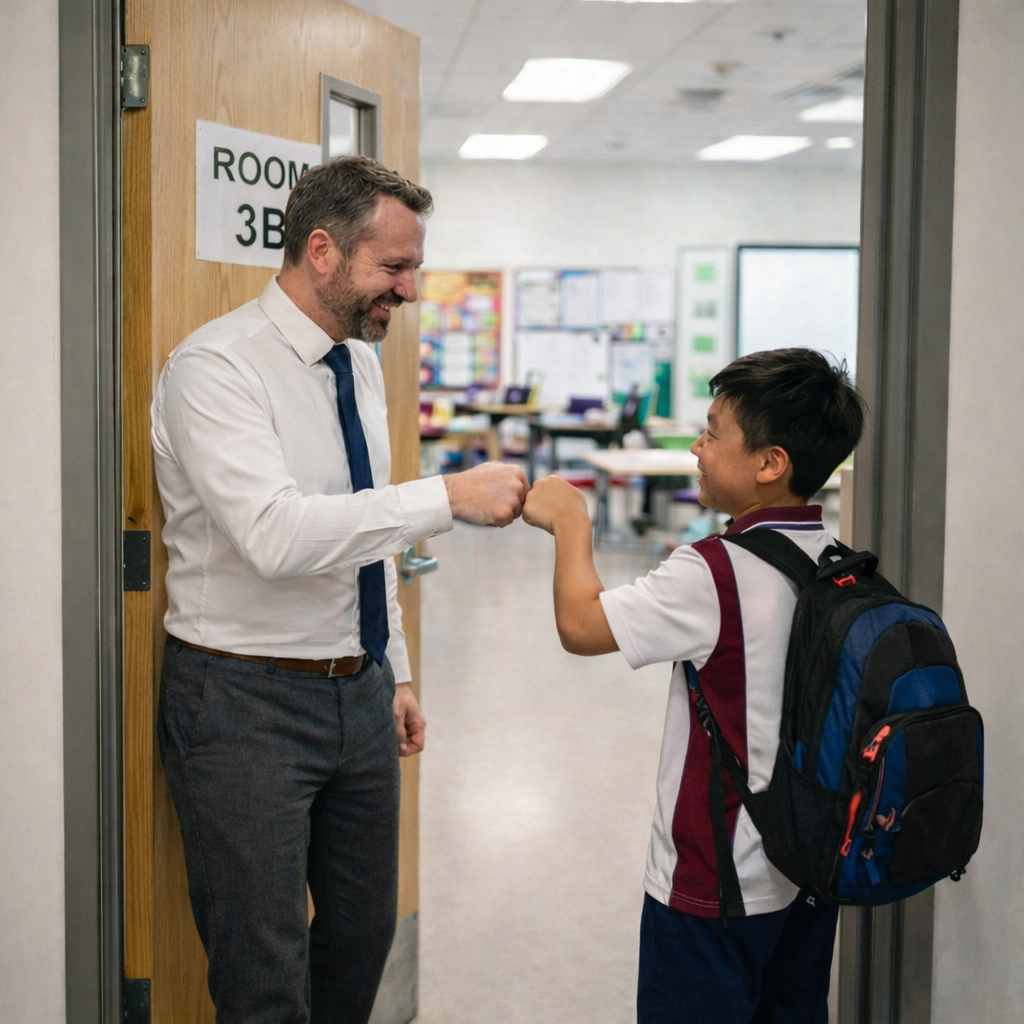
Even Year 6. Especially Year 6. Belonging doesn’t decrease with age; it ramps up.
- 🤜🤛 Fist bump
- 🙌 High five
- 👋 Wave
- 🤝 Secret handshake
You can display these symbols by the door so students can choose how they want to greet you that morning.
It says:
- I see you
- You’re part of this
2. Send one positive email home a term.
If parents only hear from you when something’s gone wrong, building trust and support is going to be impossible.
Keep it simple and specific:
- “James showed real perseverance in Maths today.”
- “Lucy was incredibly helpful in supporting others.”
This isn’t fluff, it’s strategy.
You’re:
- building partnerships
- shifting narratives
- training yourself to look for the good
Tip to help embed this practise:
- For the first 5 mins of the staff meeting, everyone sends one positive email home.
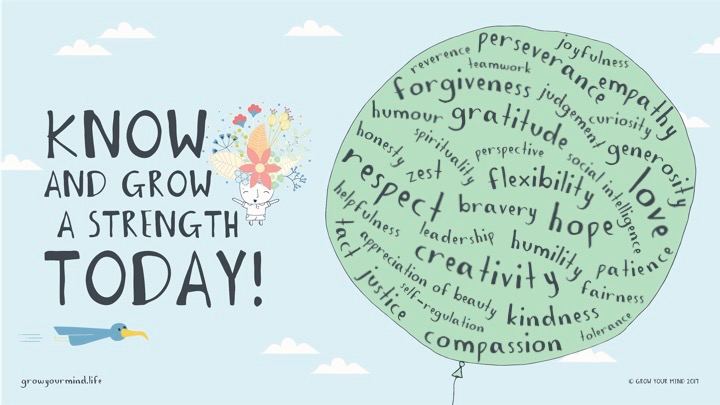
3. Put your character strengths poster up and actually use it.
Call out the strengths you’re seeing and the ones students need in the moment. If there is conflict in the room, prompt strengths like kindness, empathy, or perspective-taking.
If a student has made a poor choice on the playground, invite strengths such as responsibility, honesty, or courage to repair the situation.
When you actively look for the strengths your students are displaying, it shifts your focus from what is wrong to what’s going right, e.g. I am seeing curiosity and perseverance here from Micky and a tonne of patience from Isla. A strengths-based classroom boosts positive interactions and student agency. (It will also help you send that positive email home!)
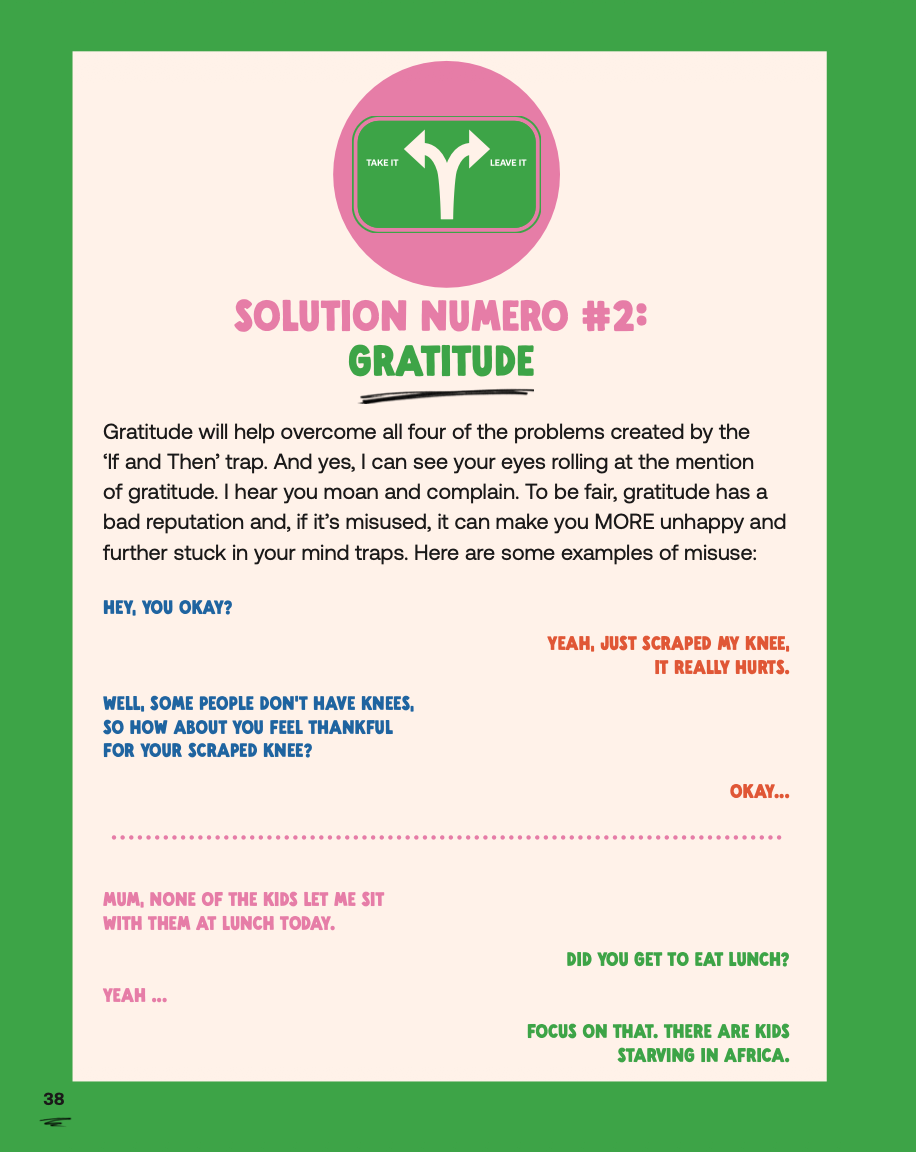
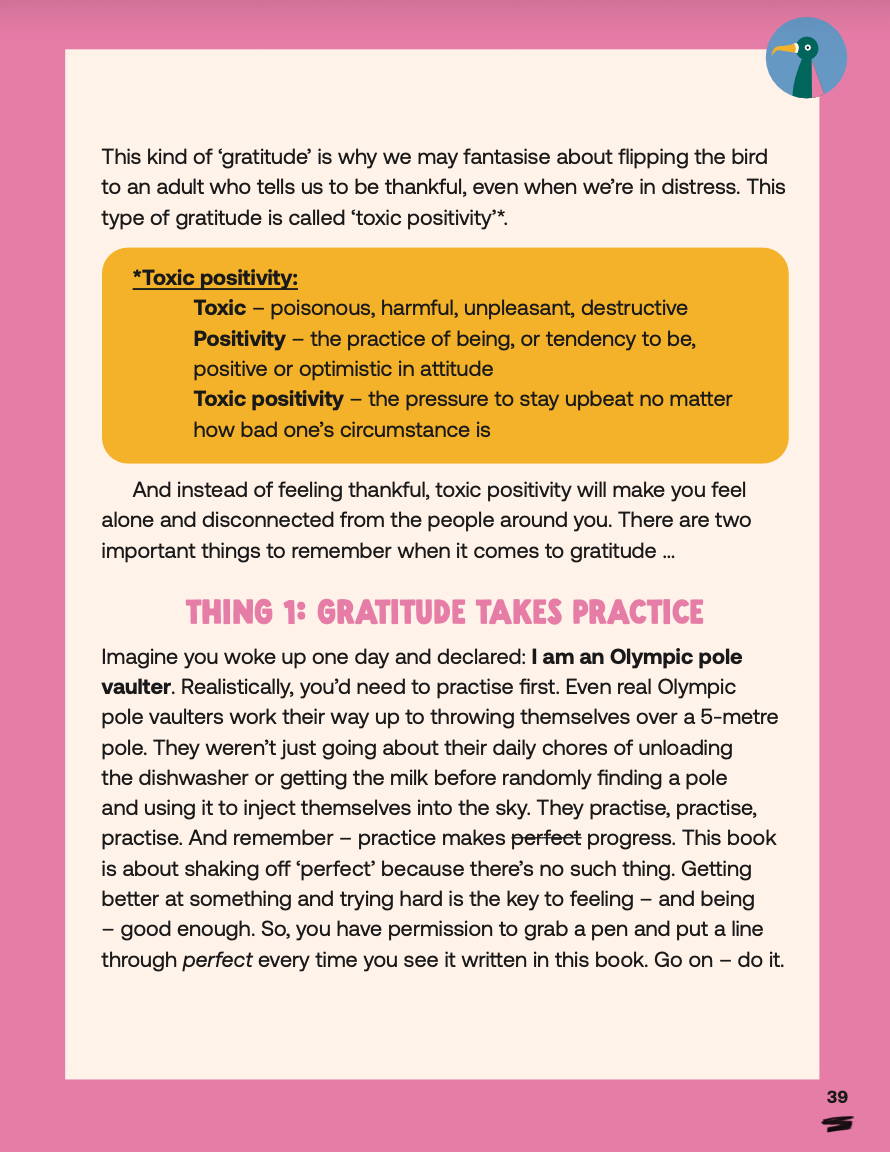
4. Build gratitude into your day
What makes us resilient? A bunch of things. But one core strategy we can practise every single day is actively noticing and accepting the good.
Gratitude is a core wellbeing theme at Grow Your Mind because we know from the research that it is an essential mental fitness skill.
Here are a few simple ways to build it into your day:
- Journalling. Ask students to reflect on what went well that day, three things they are thankful for, or two people who helped them.
- Circle time. Use the same prompts and allow each student to share.
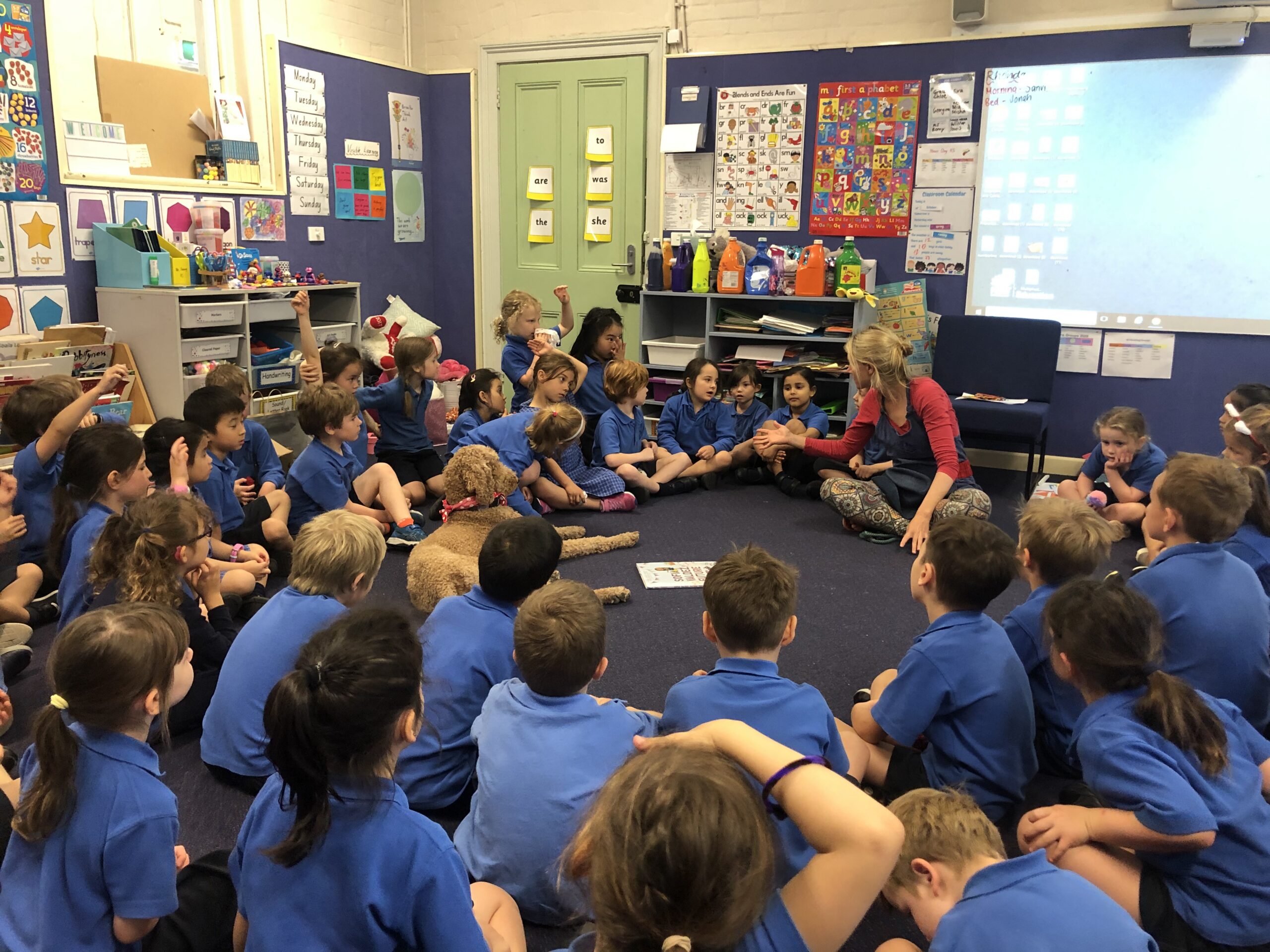
- Invite parents, once a year, to email what they appreciate or are proud of about their child. Print it and place it on the student’s desk.
- Leave notes of appreciation on students’ desks with a specific reason you value them in the class.
- Encourage students to write or draw a gratitude note and hand-deliver it to someone.
- Assembly items on gratitude – actively express thanks to fellow teachers and students publicly.
Small moments like these help students build the habit of noticing the good, which over time strengthens their ability to cope and adapt. We have an entire chapter in our children’s chapter book dedicated to building gratitude. It is irreverent, relatable and easy to start practising.
5. Make kindness the default, not the exception
Not a poster. Not a rule. A way of being. Tell your students from the get-go that we are kind even when no one is looking. Actually teach what kindness looks like and feels like.
At Grow Your Mind, we have an abundance of Grab 5 activities that build kindness, as well as units of work.
Play students our 5-minute podcast episode:
Be sure to teach students that kindness is making others feel seen.
At Grow Your Mind, we say:
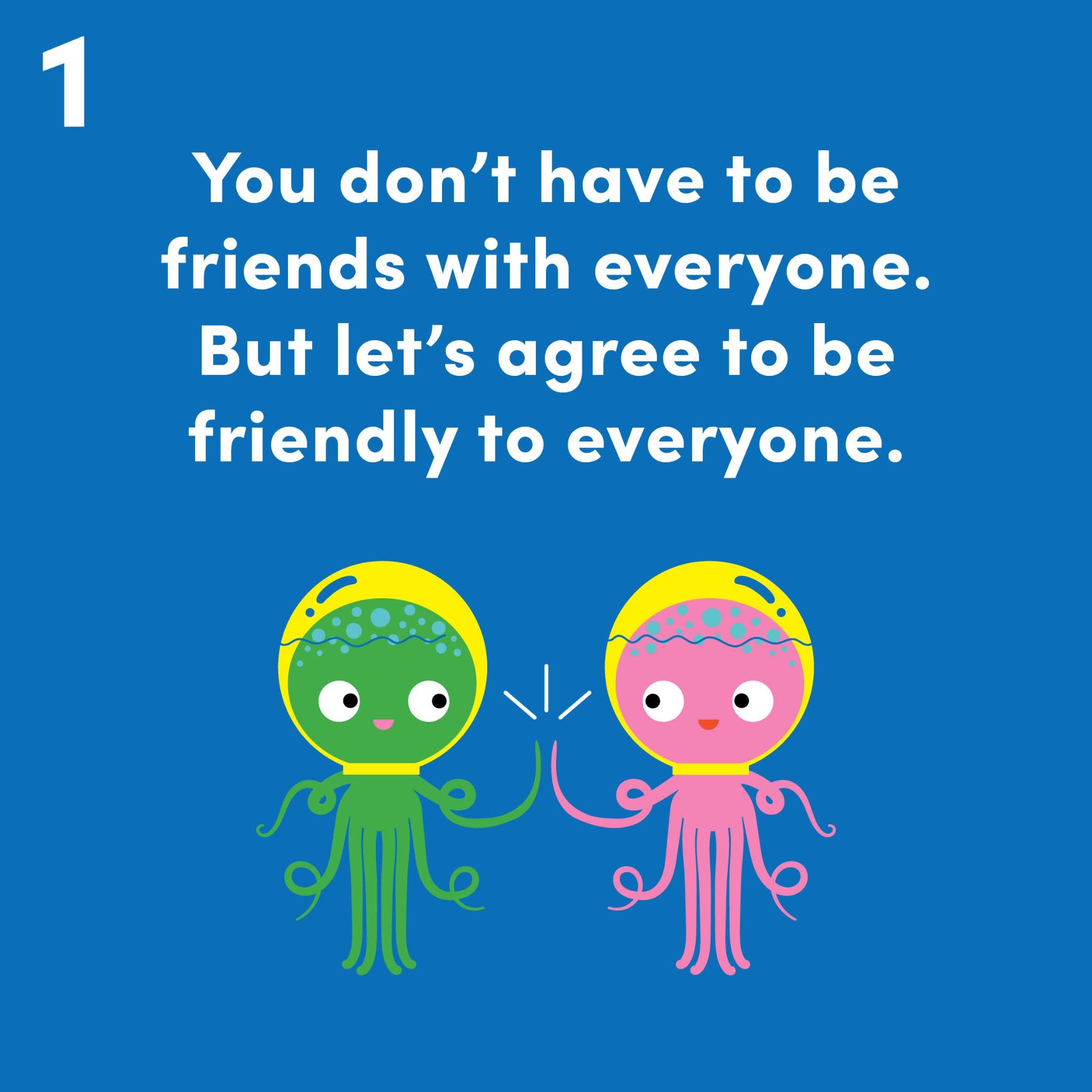
“We don’t have to be friends with everyone. But let’s agree to be friendly to everyone.”
Try:
- A kindness jar, where students can write down who they saw being kind.
- A kindness / “be of benefit” wall. Using post-it notes, students can write down acts of kindness or helpfulness they witnessed. And/or a low-key legends’ board. A wall where students anonymously post specific acts of someone being helpful or decent.
- Map it with your class. “What makes a class feel safe vs uncomfortable?” “What behaviours push people out vs bring people in?”
6. Be the culture you want to see (yes, even when it’s hard)
Children see. Children do.
Teachers see. Teachers do.
Students don’t just learn from lessons; they learn from what they see. How you handle stress. How you speak to others. How you repair mistakes. That’s what shapes culture.
You don’t need everyone on board to start shifting something.
Focus on what you can influence:
- your tone
- your reactions
- your relationships
- your ability to handle conflict productively
Even a few positive interactions a day ripple out more than you realise. Leave a kind note on a colleague’s desk. Offer to cover someone’s playground duty when they’re overwhelmed. When a student pushes your buttons, because they will, can you pause, regulate, and avoid the power struggle or accidental shame?
One of the biggest things that has helped us at Grow Your Mind, as teachers, parents and friends, is trying to have a generous assumption. Conflict itself is not the problem. However, not all conflicts need to happen.
When you choose a generous assumption, you are giving someone the benefit of the doubt. The fabulous people at Berry Street have a similar phrase: they call it unconditional positive regard. To do this well, expectations need to be clear and boundaries still held. It is not about letting things slide.
It is about understanding that every child in the room has a story. A start to the day you didn’t see. Experiences that may have been stressful. Ongoing challenges at home.
When you hold both high expectations and deep understanding, you respond differently.
Here are a few examples:
- A child calls out: They are still learning inhibitory control. Or they might be seeking connection.
- An email from a parent feels abrupt: They are likely overwhelmed, busy, or preoccupied.
- Leadership seems distracted/stressed: They are doing the best they can with what they have.
And here’s the important part. When you model this way of thinking, you are teaching your students to do the same. You are helping them learn to pause before reacting. To consider another perspective. To assume the best, instead of jumping to the worst.
This doesn’t mean you ignore behaviour or avoid boundaries. It means you respond with curiosity instead of reaction.
Play this song for students:
“Be the culture you want to see” means creating a space where it’s actually safe for others to speak up, raise concerns, ask questions, and challenge ideas without getting shut down. That means less defensiveness, less shame, more curiosity.
As Amy Edmondson (2019) shows, the strongest teams aren’t the ones where everyone agrees; they’re the ones where people feel safe to disagree. In those spaces, speaking up isn’t seen as conflict; it’s how things get better.
7. Build wellbeing into the day (not on top of it)
Grow Your Mind is not a behaviour program. But behaviour is a huge part of school life. When wellbeing is embedded proactively through regulation, connection and daily reset moments, schools are better placed to support the needs underneath behaviour, not just react to what is happening on the surface.
Think of it like brushing your teeth. You don’t wait for the cavity to form.
It is not about rewards, consequences or compliance. It is about proactively building the emotional and relational foundations that help students feel calm, connected and ready to learn. This builds a positive culture.
We see many schools get stuck when ‘wellbeing’ becomes:
- a lesson
- a thing we add
Instead, think embedded.
👉 5 minutes daily
👉 quick resets between lessons
👉 intentional connection moments
Where can you build joy into the day? Some music, movement, micro breaks outside?
Where can you build mindful breathing?
This is exactly what our Grab 5 Minutes of Wellbeing resource is for.
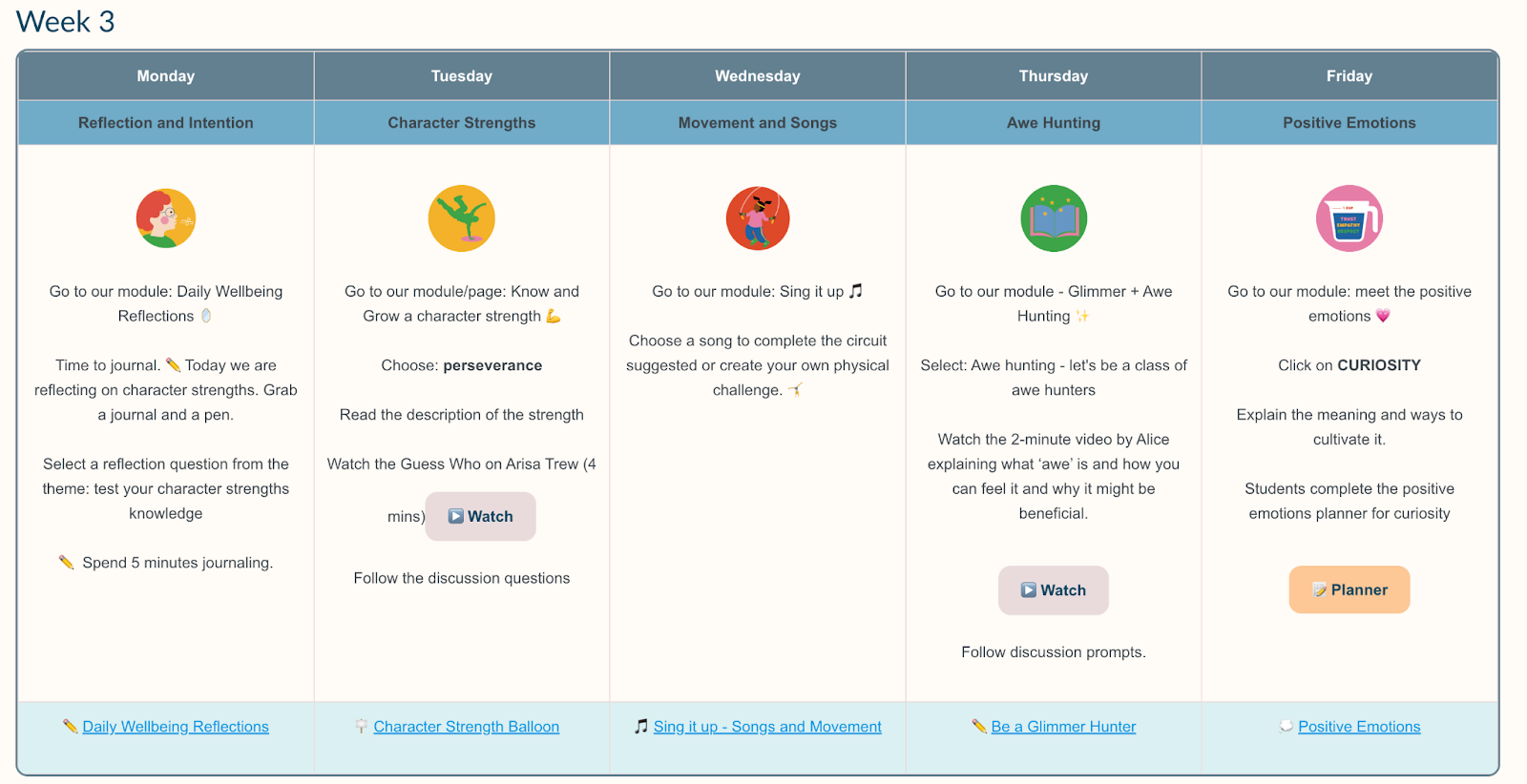
If we only support regulation after dysregulation… we’re always behind.
Instead think:
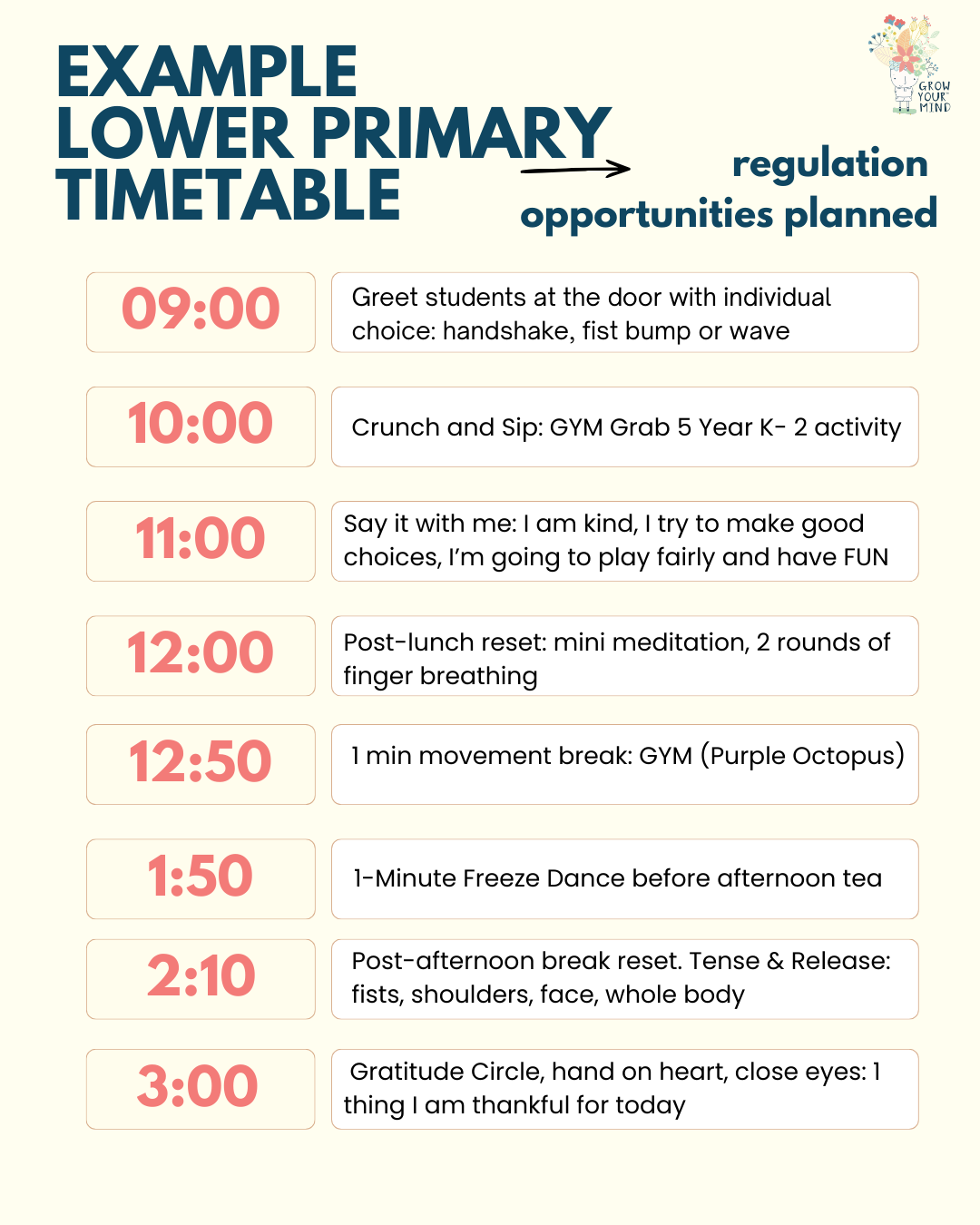
- calming activities before learning
- energisers after lunch
- connection before learning
See the blog with 2 x free sample timetables you could start playing with TODAY.
8. Set boundaries (and hold them)
If the environment around you is negative, it’s very easy to get pulled in.
Gossip. Complaints. Staffroom spirals. Protect your energy.
You are not an emergency worker. Not every email needs an immediate response. Not every parent at the gate needs to be handled in that moment.
Have a few pause phrases ready:
“I really want to give this the attention it deserves. Let’s make a time to talk.”
“I hear you. I’d like to think this through and get back to you.”
Keep interactions:
- calm
- factual
- focused
You’re not ignoring problems. You’re refusing to become one. Learn how to regulate yourself when things get heated. Sign up for our FREE 7-minute self-led PD on managing tricky moments with parents to arm yourself with skills to do just this.
9. Give students a voice
Culture isn’t something you do to students.
Let them:
- share ideas
- give feedback
- lead small initiatives
Even small ownership = big buy-in. What do students think makes a positive vibe at school? How would they like to see joy + kindness incorporated into the school day?
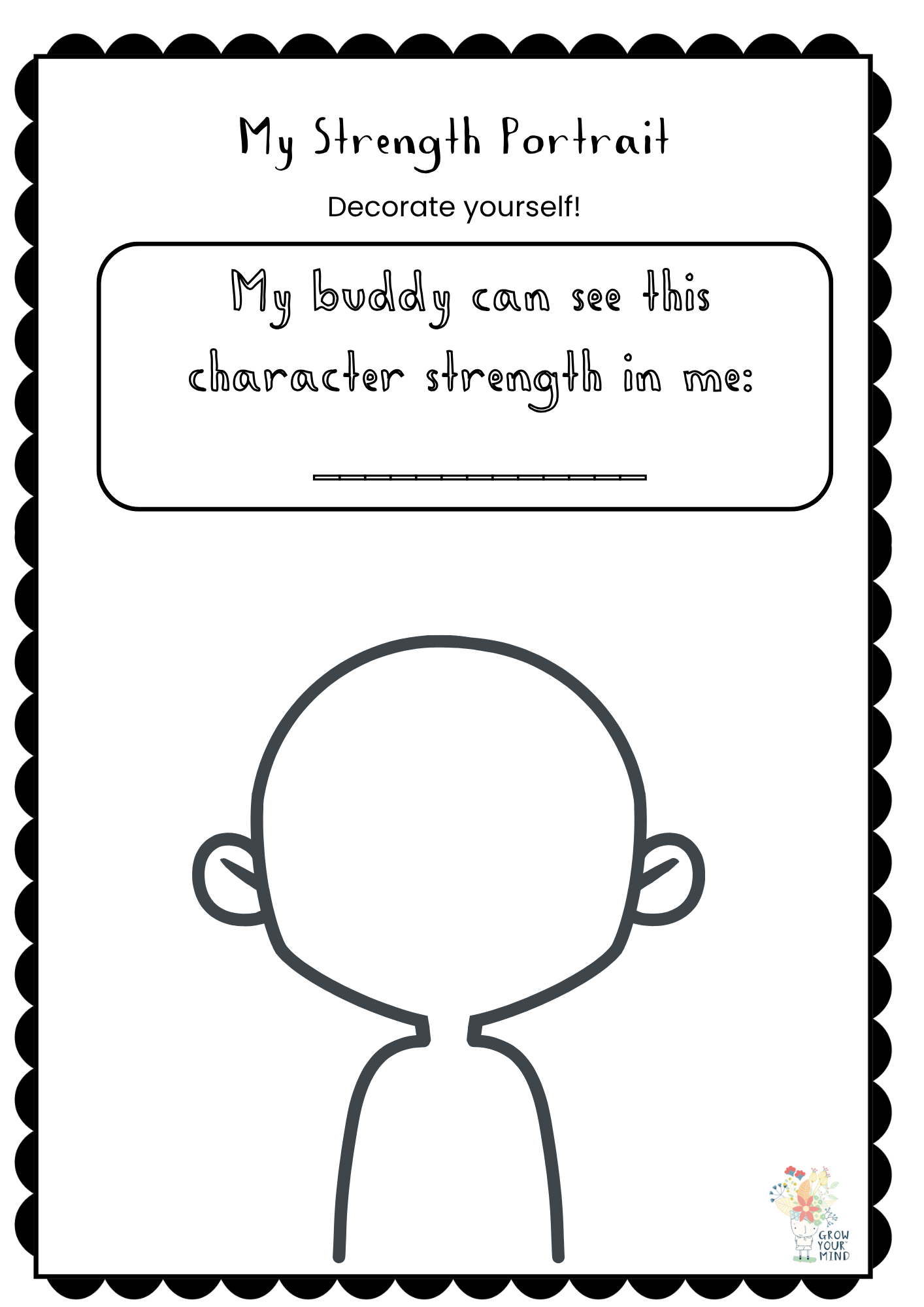
Buddy programs are a simple way to amplify student voice. One idea: older students can read meaningful picture books to students and the great thing is, they aren’t just reading to younger ones, they’re learning with them. See our 📚 Grow Your Mind recommended book list. After reading, pairs can co-create something like a Strength Portrait, sharing what they notice and value in each other.
We also have a free children’s wellbeing podcast that is for ALL children! Students send us topics they want to hear about, students help write the episodes, and students are the voices you hear on each episode
10. Celebrate the good (loudly and often)
Not awards, we are talking about words.
Mark Twain said (likely misattributed or paraphrased but still worth mentioning here)
“I could live for two months on a good compliment.”
Cheer each other on, loudly. Notice the good stuff across the whole school and say it out loud: to fellow teachers, learning support staff, students and admin alike.
A genuine “that was great” or “you handled that so well” goes a long way in building a culture where everyone feels seen (and wants to show up for each other).
So:
- Who can you recognise today?
- What compliment can you give today?
Effort. Compassion. Kindness. Zest.
What you focus on… grows.
Oh, and one more bonus idea to build a rockstar positive culture, that might save your sanity…
Control what you can. Let go of the rest.
You cannot fix:
- leadership
- parents
- the entire system
You can control:
- your classroom
- your interactions
- your response
And do not underestimate the power of the things you CAN control. There will be a ripple effect. Think of other things you can control: exercising before or after work, calling someone who makes you feel great, reading a book for the love of it. Making time for joy, literally plan for joy – put it in your calendar! Joy is another one of those rock-solid, resilient building emotions, so get it into your life.

The truth (and we are a wellbeing program telling you this)
Simply having a wellbeing program won’t change your school culture. Using it consistently, daily, imperfectly, will. When you embody the Grow Your Mind approach, you’re not just teaching it; you’re living it.
You become someone who:
- embraces imperfections
- looks for strengths in themselves and others
- catches kids doing the right thing
- isn’t a doormat to parent demands or leadership
- leads with generous assumptions (this is everything)
- can regulate, even when things feel hard
And that’s what starts to change culture.
And finally…
There’s a Māori proverb we adore at Grow Your Mind:
He aha te mea nui o te ao?
He tāngata, he tāngata, he tāngata.
What is the most important thing in the world?
It is people. It is people. It is people.
Because when people feel like they belong, everything changes. Behaviour shifts. Connections deepen. Culture strengthens.
Strong cultures aren’t accidental. They’re built when people cheer each other on, say the hard things (nicely), expect a lot (in a good way), and face challenges head-on, not with a strategic “let’s just ignore that.”
It won’t happen overnight, but as Pantene Pro-V promised us in the glory days of ’80s and ’90s ads… it will happen. It will happen in the small moments. The everyday interactions. The way we choose to show up. That’s culture. The people and what they do, every single day.

Book a free discovery call with our team to find out more about Grow Your Mind