A clearer map: what we cover (and what we don’t)
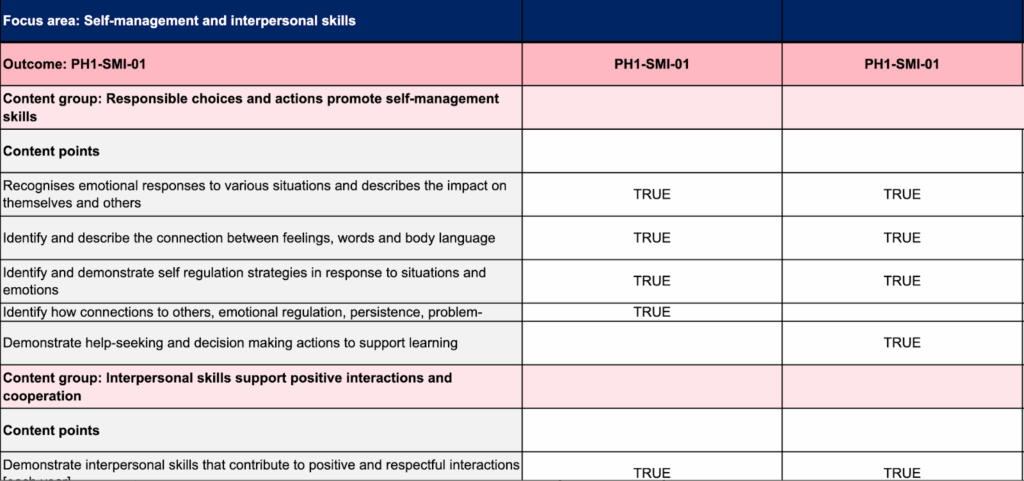
To make planning easier, we’ve created two new documents that clearly outline which parts of the curriculum Grow Your Mind covers and what we don’t.
You’ll now find:
- Updated K–6 Scope & Sequence aligned to the Australian Curriculum
- Updated K–6 Scope & Sequence aligned to the new NSW Curriculum
- Content elaborations and content points included
These updated Scope & Sequence documents take the guesswork out of planning. Instead of piecing things together or cross-referencing multiple places, teachers can instantly see how each Grow Your Mind unit of work aligns with the curriculum and what outcomes it directly supports. The documents clearly map out the units of work across the year, so you can follow a logical sequence, understand where each concept fits, and plan ahead with confidence.
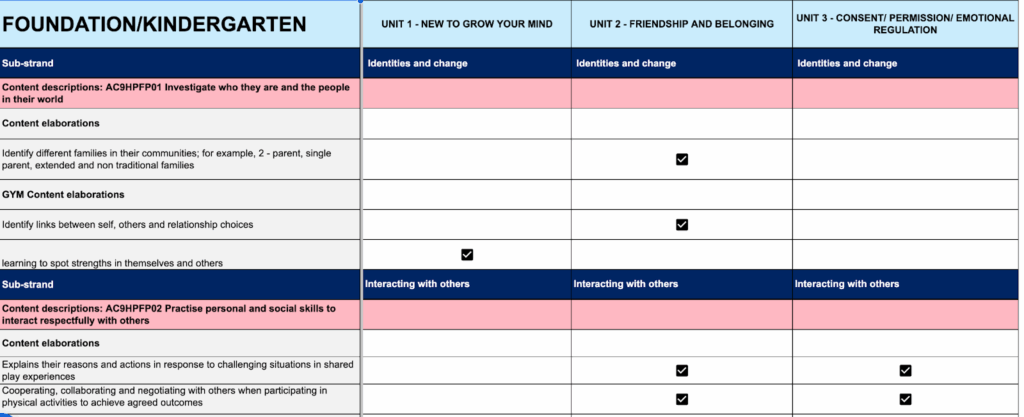
This refresh is designed to ensure teachers feel guided rather than overwhelmed. One glance shows what is taught, what is not, and where Grow Your Mind fits within the wider Health and PDHPE curriculum. It’s a practical tool that helps you use your time wisely, hit the required outcomes, and keep wellbeing teaching purposeful and simple.
Our new 3-term structure
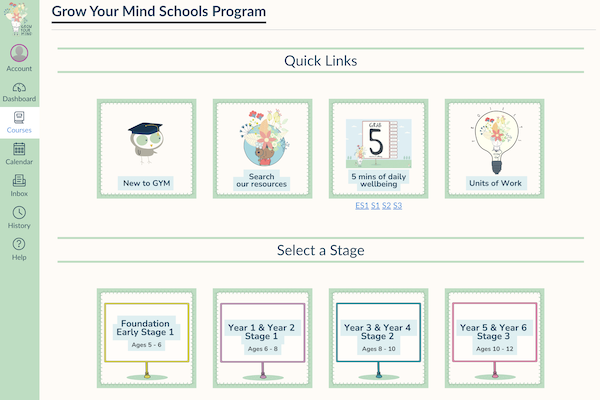
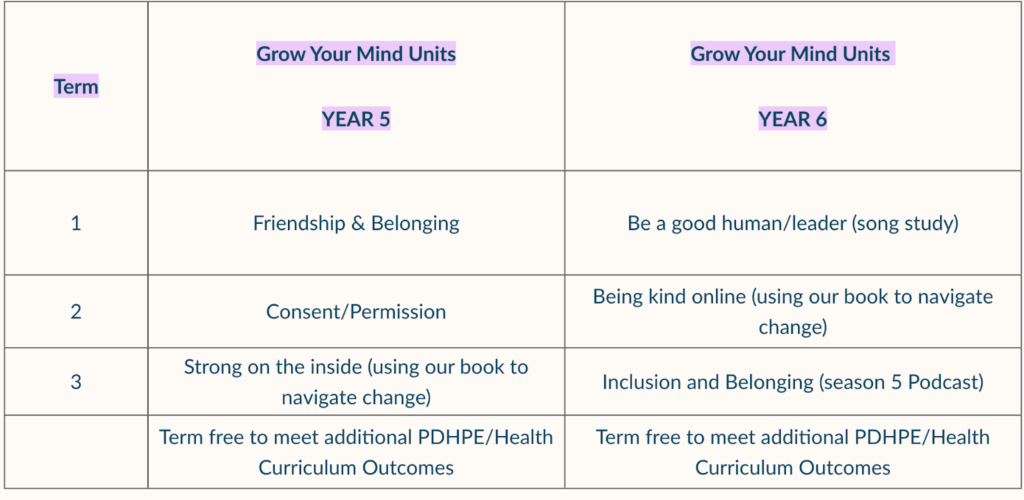
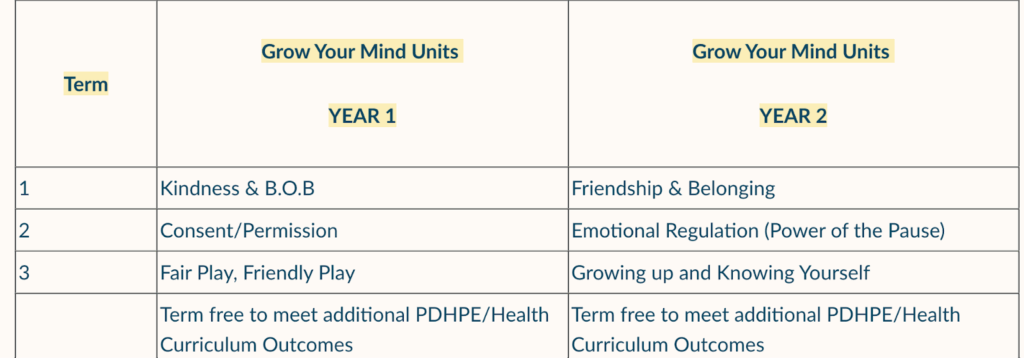
We’ve condensed and combined many of our Units of Work into a streamlined three-term structure. This gives you the time and space to dedicate a whole term to other parts of the health curriculum not covered by Grow Your Mind.
The three terms follow a simple, meaningful pattern that focuses primarily on emotional regulation/resilience, friendship skills, permission/consent and identity.
Watch this space: Unit of Work refresh
We have also created fabulous new units designed to help students navigate change.
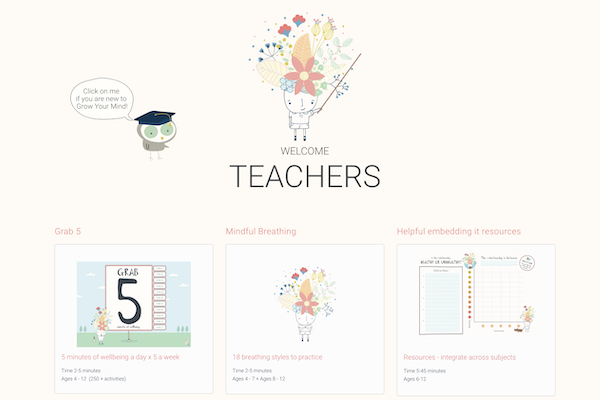
Our content is ready to go, but our design is in the work-in-progress stage. By the middle of January 2016, you will find a clearer look when it comes to our units of work page. This update is part of our ongoing plan to make the platform smoother, clearer, and far easier to navigate.
Sneak Peek: what’s new or updated
K–2: The Animals, Friendships, Permission & Safer Play
Our youngest learners have an even stronger focus on friendships, kindness, and using our Grow Your Mind animals to help them make safe, clear choices in the playground. The goal? Foundations for respectful relationships long before the tricky stuff arrives.
Years 3–6: spotlight on new units
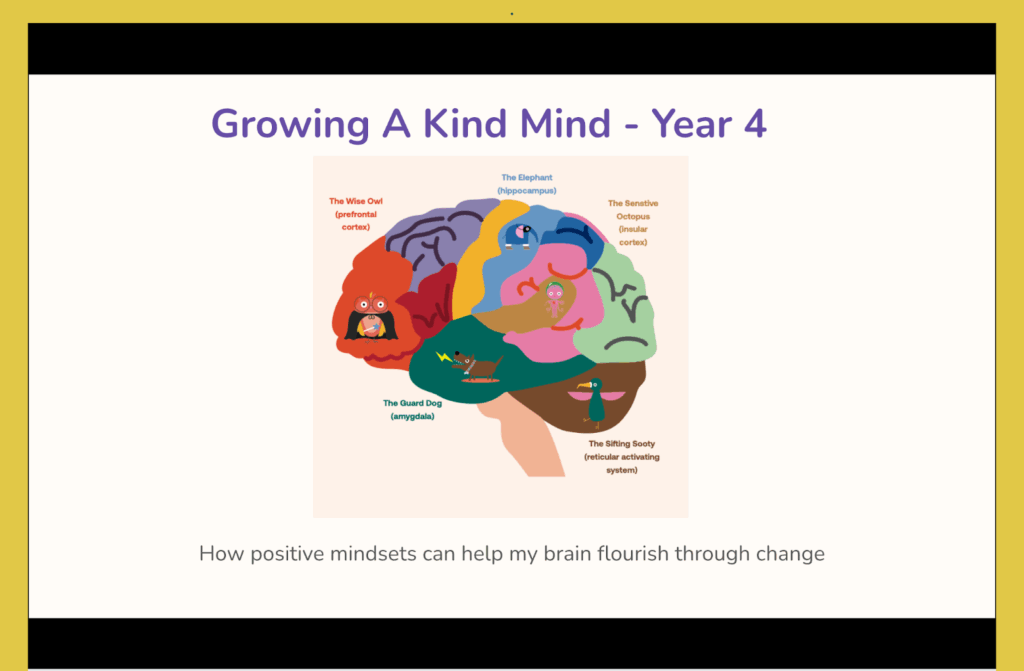
⭐ Year 4: Growing a Kind Mind
This updated unit explores how our mindset shapes the way we respond to change, challenges, and each other. Using Chapters 1, 9, and 10 of How to Be a Good Enough Kid, students:
- Explore gratitude, kindness, and self-compassion
- Learn strategies for navigating conflict
- Compare green time vs screen time
- Practise growth and benefit mindsets
- Work collaboratively to create a mindset board game
⭐ Year 5: Strong on the Inside
This unit uses How to Be a Good Enough Kid and our comics to help students explore:
- Self-worth
- Emotional regulation
- Handling shame and fear
- Decision-making
- Navigating friendship challenges
- Coping with the physical, emotional, and social changes of this age
Students complete creative writing, drama, discussion, and reflection tasks, leading to a summative project: a class magazine full of stories, advice, and creative works that build their own resilience and confidence.
⭐ Year 6: Being Kind Online
This unit supports students to form a positive identity outside of screens. Students explore:
- Digital identity and digital distraction
- Digital footprints
- Replacing screen time with green time
- Healthy habits using DOSE (dopamine, oxytocin, serotonin, endorphins)
- Kindness online and offline
- Understanding who is “whispering in your ear” and how it shapes identity
It’s practical, relevant, and designed to help students make thoughtful choices in a digital world that’s… a lot.
The Bottom Line
This restructure is all about making your life easier:
✔A more focused, simplified selection of unit
✔ Clearer connections to the curriculum
✔ Streamlined navigation
✔ Stronger themes
✔ Updated, richer content
✔ Better alignment to student developmental stages
And don’t worry, if one of your favourite units doesn’t appear in the new structure, it hasn’t vanished. It’s simply moved to The Archive, still ready and waiting for you, like that dependable friend who always shows up.